Buildings in Storage: Dunstable Shop
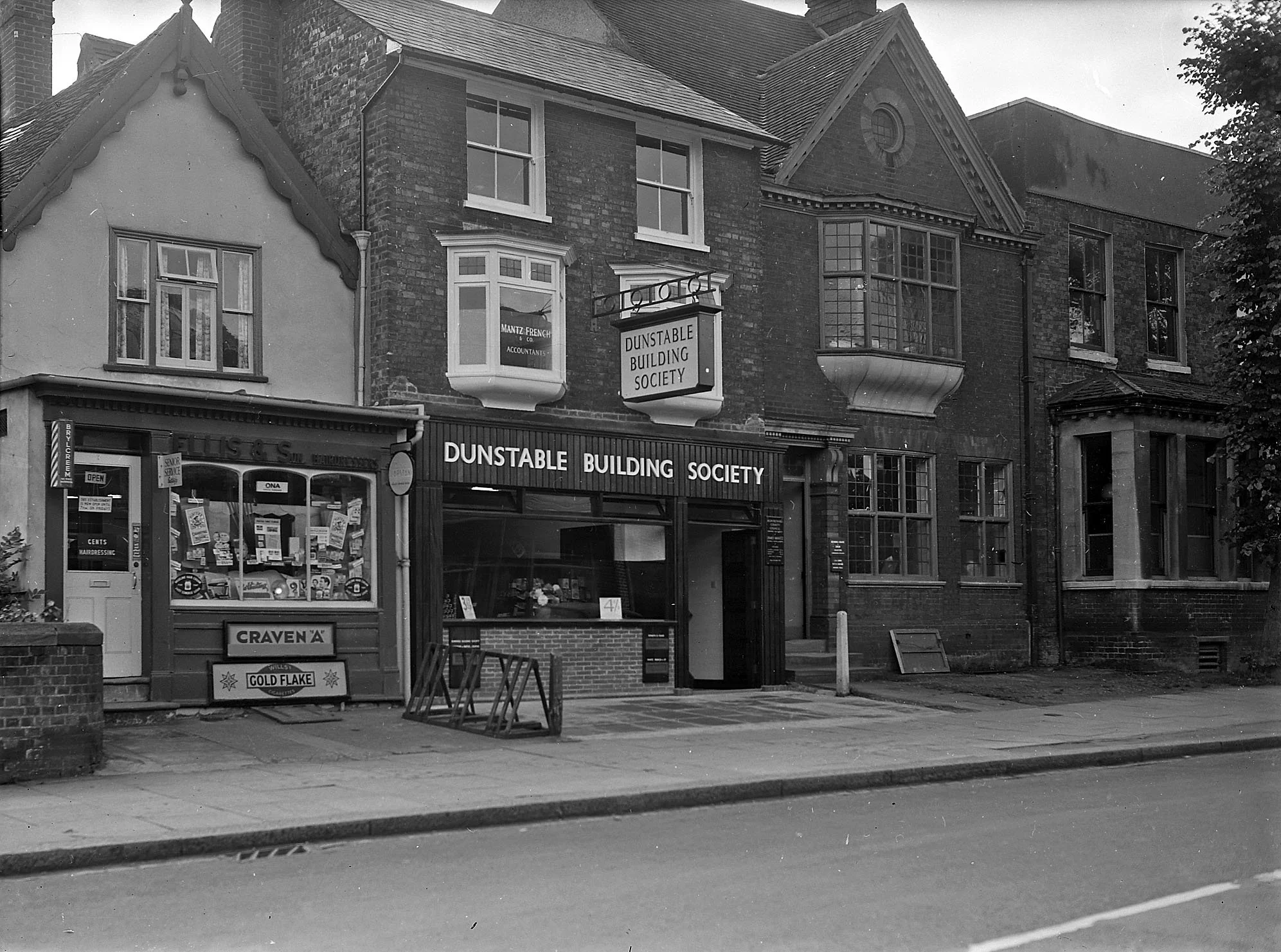
7 West Street (on the left), Dunstable in situ, Chiltern Open Air Museum Archive
Stowed away in storage at Chiltern Open Air Museum is a building with a long and surprisingly busy past. Known as the Dunstable Shop, this medieval structure once stood at 7 West Street in the Bedfordshire town of Dunstable. Although it was dismantled in 1977 to make way for a new supermarket, its story is still very much alive.
Unlike many English towns that grew slowly over time, Dunstable was carefully planned. Its location on some of Britain’s oldest and busiest roads shaped both the town and the buildings that lined its streets.
A Town Built on the Road
Long before medieval Dunstable existed, the Romans established a settlement called Durocobrivis beside Watling Street, one of the most important roads in Roman Britain. Close by ran the ancient Icknield Way, a route that had been used for centuries. Together, these roads brought people, trade and opportunity.
When Roman rule ended, the settlement faded away. Woodland crept back, buildings fell into ruin, and the crossroads became known as a dangerous place for travellers. For several hundred years, the town effectively disappeared.
A Royal Restart
In 1119, Henry I changed everything. He ordered the area to be cleared, made the crossroads safer, and laid out a new planned settlement. To help it succeed, he offered incentives to encourage people to move there and trade.
At the same time, he founded Dunstable Priory, bringing Augustinian Canons into the town. The Priory quickly became a major employer and landowner, helping the town grow. This combination of royal planning, religion and road traffic makes Dunstable unusual: it was a purpose-built medieval market town.
Long and Narrow by Design
Dunstable grew directly along the roads that ran through it. By around 1600, the town was essentially one long high street, made up of what we now know as High Street North, High Street South and Church Street, with just a few side streets like West Street.
Because the town lay on the main route between London and the Midlands, it became a popular stopping point. Inns, shops and workshops lined the streets, serving travellers and locals alike.
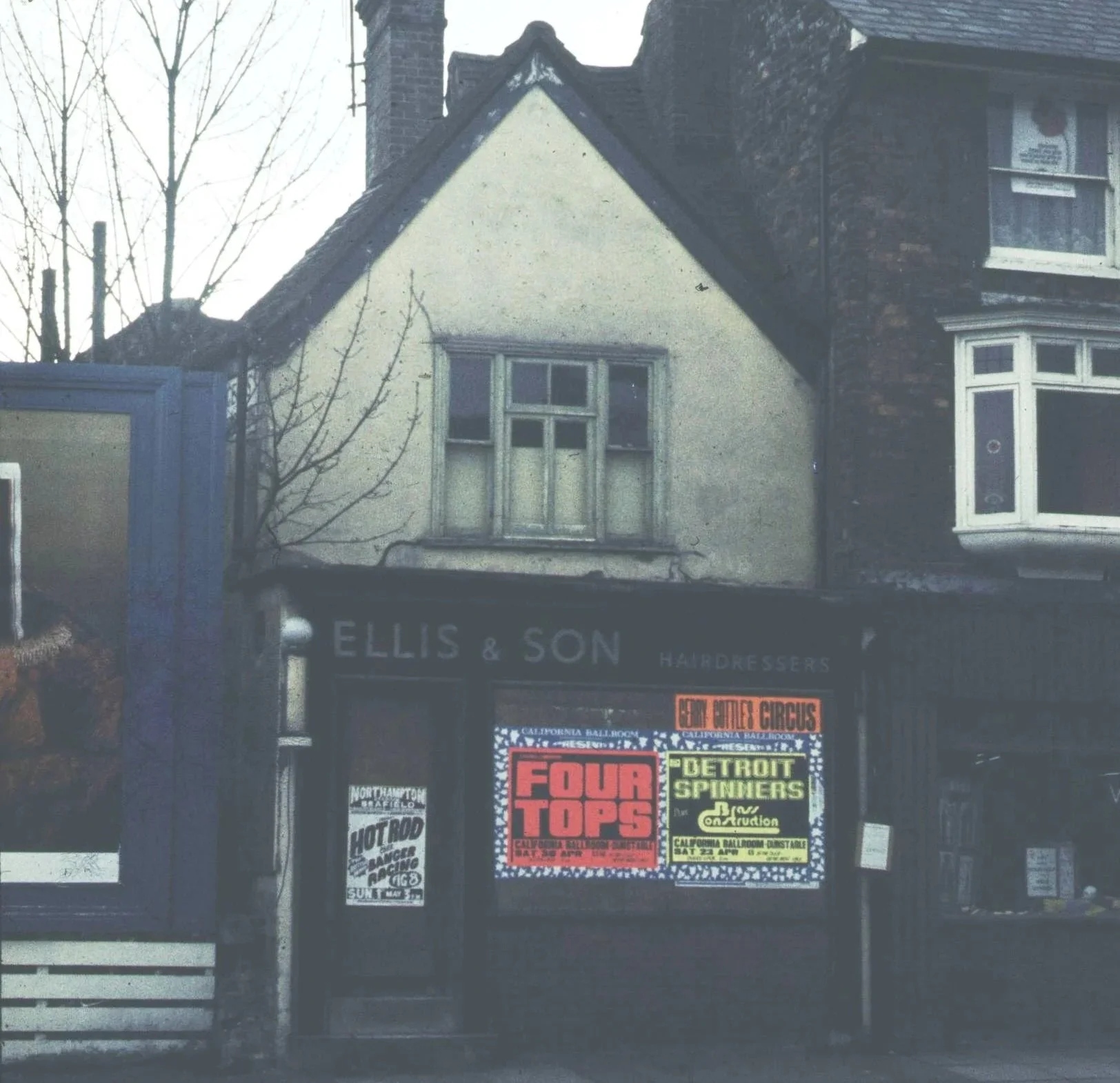
7 West Street, Dunstable - Mid 1970s
The Dunstable Shop
The building now known as the Dunstable Shop dates back to the fifteenth century. It is a timber-framed town building with a jettied upper floor, where the first floor projects out over the street. This was a practical way to gain extra space while keeping valuable frontage on a busy road.
It stood on a typical medieval burgage plot, narrow at the front and stretching far back. Inside were features essential for town life, including a well and an open hearth in the rear hall. The building worked as both a home and a place of business.
Five Centuries of Change
Like many historic buildings, the Dunstable Shop adapted as times changed. In 1868 it was recorded as The Vine Inn, linking it directly to the town’s role as a place for travellers. Later it became an oyster bar, an auctioneer’s premises, and from 1900 until 1974, a gentlemen’s hairdresser.
Over more than five hundred years, the building remained part of everyday life in Dunstable. Although it no longer stands on West Street, its survival in storage allows us to tell the story of a town shaped by roads, travel and careful planning.