
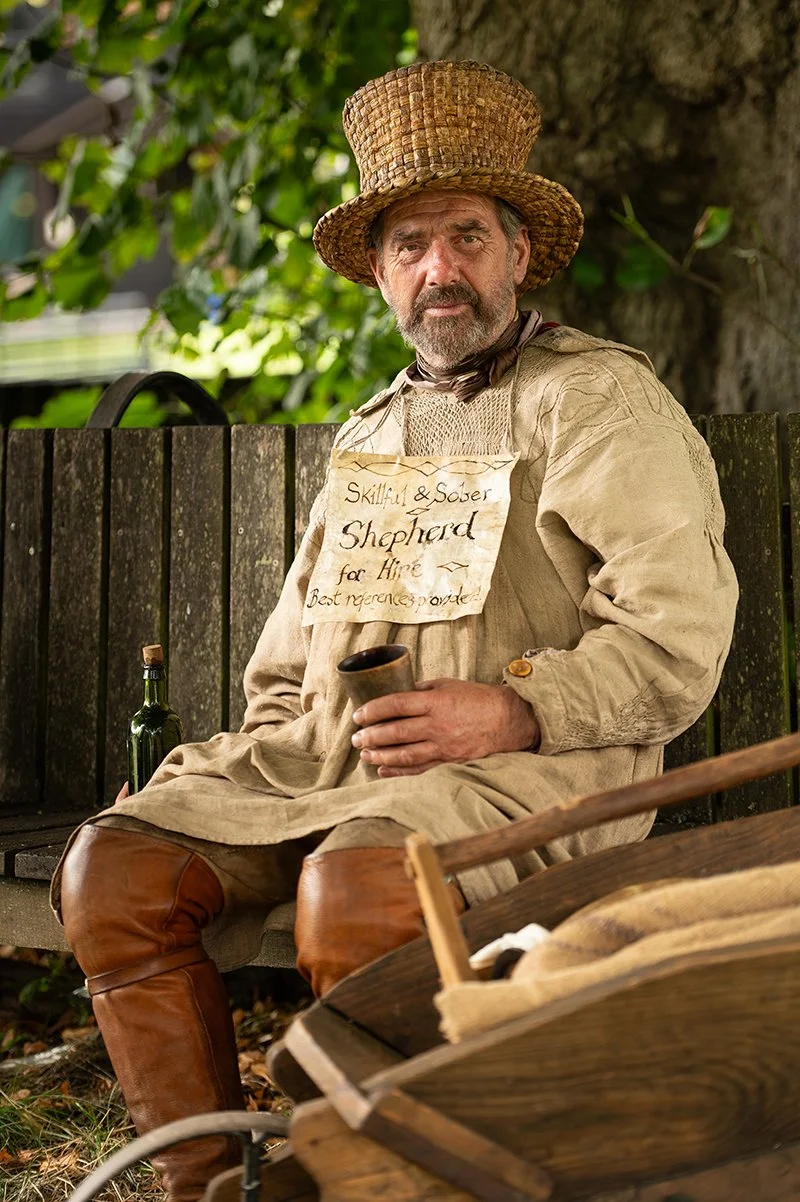
“Shepherd for Hire” - Ragged Victorians at COAM
For most working people in the past, job security was unknown. Even at the beginning of the 20th century it was not unusual for agricultural and domestic workers to be hired by the year and if they could not stay where they were or wanted a different job they would have to go to a local annual Hiring Fair. These could have various local names such as Mop Fair, Statty (short for Statutary), Sitting and others.
When Were the Earliest Hiring Fairs?
The ultimate origin of the Fairs is found in The Ordinance of Labourers of 1349. During the outbreak of the Black Death in England an estimated 30−40% of the population died. The decline in population left surviving workers in great demand in the agricultural economy of Britain. Landowners had to face the choice of raising wages to compete for workers or letting their lands go unused. Wages for labourers rose and translated into inflation across the economy as goods became more expensive to produce. The wealthy elites suffered under the sudden economic shift and difficulties in hiring labour created frustration. The harsh demands of this Statute were in practice unenforceable and it was not until 1522/3 that the Statute of Artificers managed to enforce a system that worked thanks to a complex bureaucracy.
Hiring Fairs in English Literature
A well-known description of how workers would present themselves at a hiring fair is found in Thomas Hardy’s Far from the Madding Crowd (1874):
“Carters and waggoners were distinguished by having a piece of whip-cord twisted around their hats; thatchers wore a fragment of woven straw; shepherds held their sheep-crooks in their hand; and thus the situation required was known to the hirers at a glance.”
Making a Deal at a Hiring Fair
If a deal was made, the farmer would give the new employee a small sum of money (a shilling to half a crown) to seal the deal and this money was variously called earnest money, God’s penny, fastening money or fes. That done, the normal activities of any fair were available: sideshows, gingerbread stalls, rides, etc. and accompanied by heavy drinking, eating, flirting, fighting and general misbehaviour. The towns of the Chilterns would certainly have had such events as part of their yearly routine.