
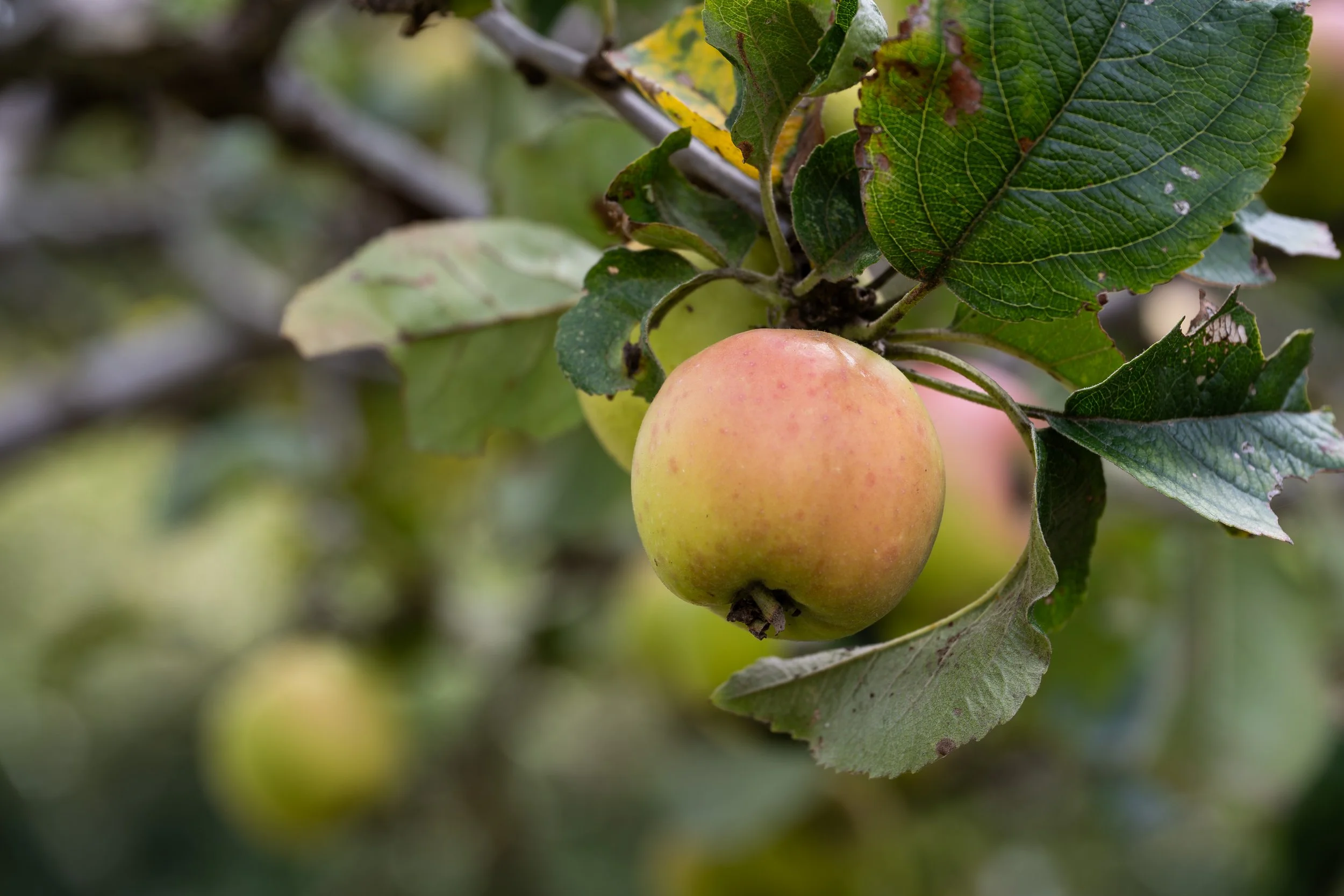
Apples from COAM’s Orchards
Few things seem to capture autumn quite like an apple. For generations, apples have played an important part in rural life. They could be eaten fresh, cooked, stored for winter or pressed for their juice, whilst the orchards themselves became distinctive features of the English countryside.
Yet the annual apple harvest is far less predictable than it might appear. A tree laden with fruit one autumn can produce surprisingly few apples the following year. Weather months before harvest can determine if there will be a bumper crop, while apples themselves have become surrounded by some wonderfully strange traditions and superstitions.
Why don't apple trees produce the same crop every year?
If you have an apple tree in your garden, you may have noticed something peculiar. One year you can have more apples than you know what to do with; the following year there may hardly be any. There is a name for this: biennial bearing.
Some apple varieties, such as Bramley’s Seedling, are particularly prone to producing a large crop one year followed by a much smaller one. Producing hundreds of apples requires considerable resources from the tree. After supporting a particularly heavy crop, it may form fewer flower buds for the following spring – and fewer flowers ultimately mean fewer apples.
The cycle can then repeat. With relatively little fruit to support in the quieter year, the tree can devote more of its resources to producing flower buds, potentially resulting in another bumper crop the following season.
Weather, growing conditions, pruning and the variety of apple can all influence the pattern. The Royal Horticultural Society notes that although certain cultivars are naturally more prone to biennial bearing, factors including weather, soil fertility and available moisture can also contribute.
So an almost empty tree isn't necessarily a sign that something has gone wrong. Sometimes the tree is simply having a quieter year.
An autumn apple crop actually begins in spring
Although we associate apples with autumn, the story of the year's crop begins many months earlier when the trees blossom.
Those few weeks of spring can be critical.
Apple flowers need to be successfully pollinated before fruit can develop. Many apple varieties also benefit from – or require – another compatible apple variety flowering nearby at around the same time.
Then there is the challenge of the British weather.
A late frost can damage blossom, whilst prolonged cold, wet or windy weather can reduce the activity of pollinating insects. Drought and other difficult growing conditions later in the year can have an effect too.
This means that when you look at a tree full of apples in September, you are seeing the result of events that began back in spring. Those few cold nights in April can help determine what appears in the orchard five months later.

Lane’s Prince Albert Apples - best used for cooking, baking and purees
Not every apple was meant to be eaten straight from the tree
Today we are accustomed to choosing a relatively small selection of familiar apples in supermarkets throughout the year, such as a Pink Lady, a Braeburn, or a Granny Smith. Historically, there was enormous value in having apples suited to different purposes.
Some were best eaten fresh. Others were particularly useful for cooking. Some kept well in storage, while others were prized for pressing and cider making.
For rural households, this variety mattered.
A delicious apple that deteriorated quickly might be wonderful during harvest but of little use by Christmas. A less glamorous-looking variety capable of keeping for months could be considerably more valuable when fresh food was harder to obtain.
Autumn was therefore not simply about picking fruit. It was about deciding what should be eaten, what could be stored and what needed to be processed before it spoiled.
Why traditional orchards are about much more than apples
An old orchard can look rather untidy compared with rows of intensively managed modern fruit trees – and that can be part of what makes it so valuable.
Traditional orchards combine several different types of habitats. There may be grassland beneath the trees, hedges around their boundaries, and old fruit trees with cracks, cavities and decaying wood. Together these create homes and feeding opportunities for an enormous variety of wildlife. In spring, blossoms provide nectar and pollen for insects. By autumn, fallen and overripe fruit provides food for birds, mammals and invertebrates. Whilst the older trees can develop hollows and decaying wood that support fungi, insects, birds, bats and other animals.
An apple that has fallen to the ground and begun to rot may no longer look appealing to us, but within the orchard it is still very much part of the ecosystem. Traditional orchards are now recognised as an important habitat, making the survival of old orchards about much more than preserving fruit varieties.
Apples, autumn and some rather strange superstitions
Perhaps because apples were such a familiar part of everyday life, they also found their way into folklore.
And some of the traditions were rather unusual.
One old fortune-telling game involved carefully peeling an apple in one continuous strip. The peel was then thrown over the shoulder, and the shape it formed on the ground was examined. If it resembled a letter, that was supposedly the initial of your future sweetheart.
Apples also became associated with autumn games and celebrations, including apple bobbing. The combination of abundant seasonal fruit, gatherings and older traditions helped establish the apple as one of the fruits most closely associated with autumn festivities.
But perhaps Britain's most spectacular orchard tradition comes slightly later in the year.
Would you sing to an apple tree?
In parts of Britain, the answer was yes.
The tradition of wassailing involved communities gathering in orchards during winter, often around Twelfth Night, to encourage a good apple crop in the coming year.
Depending on local custom, people might sing to the trees, bang pots and pans, drink cider and generally create as much noise as possible. Some traditions involved pouring cider around the roots or placing cider-soaked toast among the branches.
The purpose was partly symbolic: drive away unwanted spirits, honour the trees and encourage them to produce a plentiful crop.
Considering how unpredictable an apple harvest really can be, perhaps it isn't surprising that our ancestors were willing to try a little supernatural assistance.
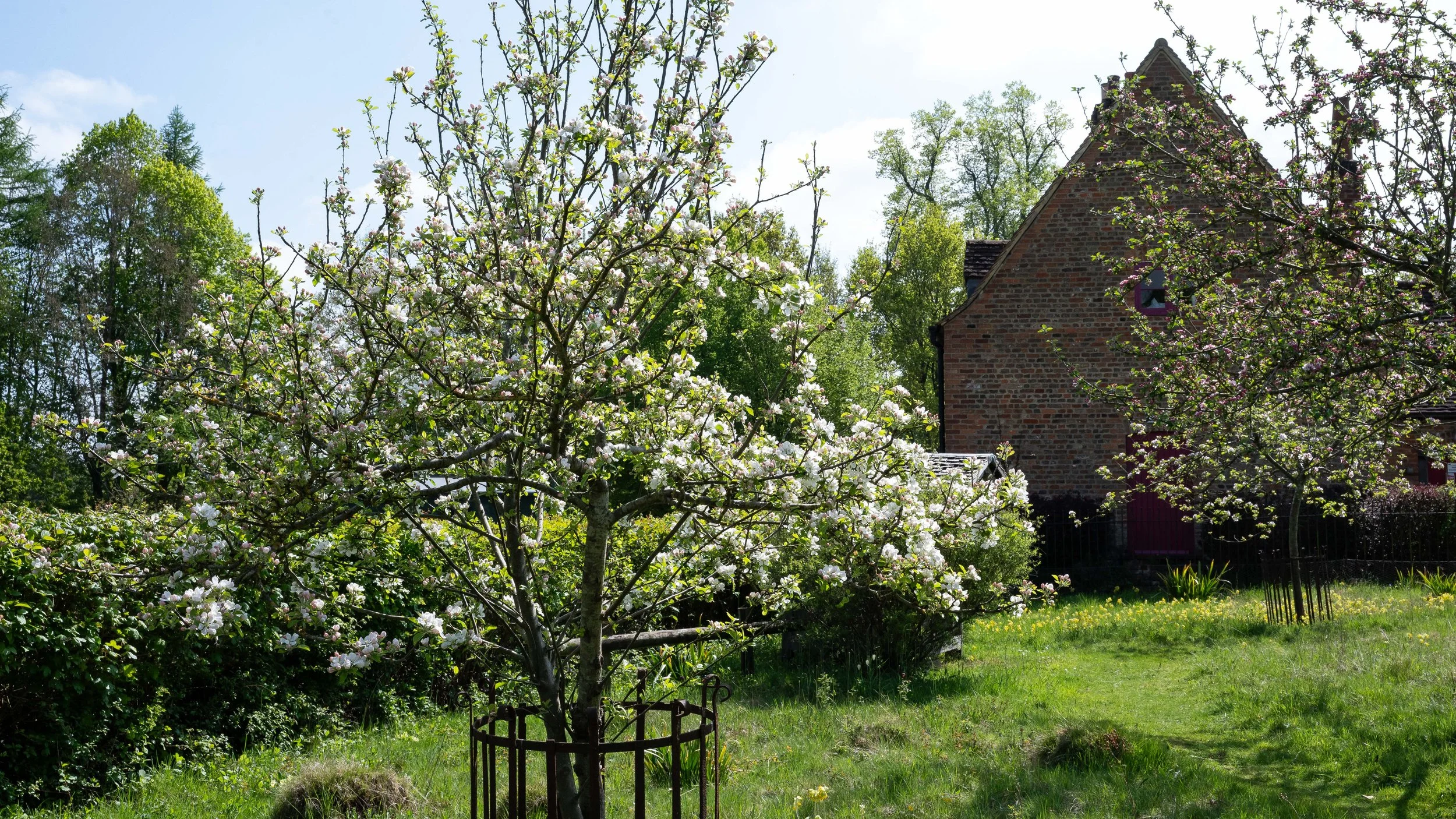
Apple orchard outside Astleham Cottage
Saving a little of autumn for winter
Before refrigerators, freezers and year-round imported fruit, preserving the autumn harvest was an important part of preparing for winter.
Certain apples could be stored for surprisingly long periods if they were carefully selected and kept in suitable cool conditions.
Bruised or damaged fruit was less suitable for long-term storage, so it made sense to use it quickly.
Apples could be cooked, preserved or pressed, allowing households to make use of fruit that might otherwise have spoiled.
That principle – making the most of what was available when it was available – was fundamental to rural life.
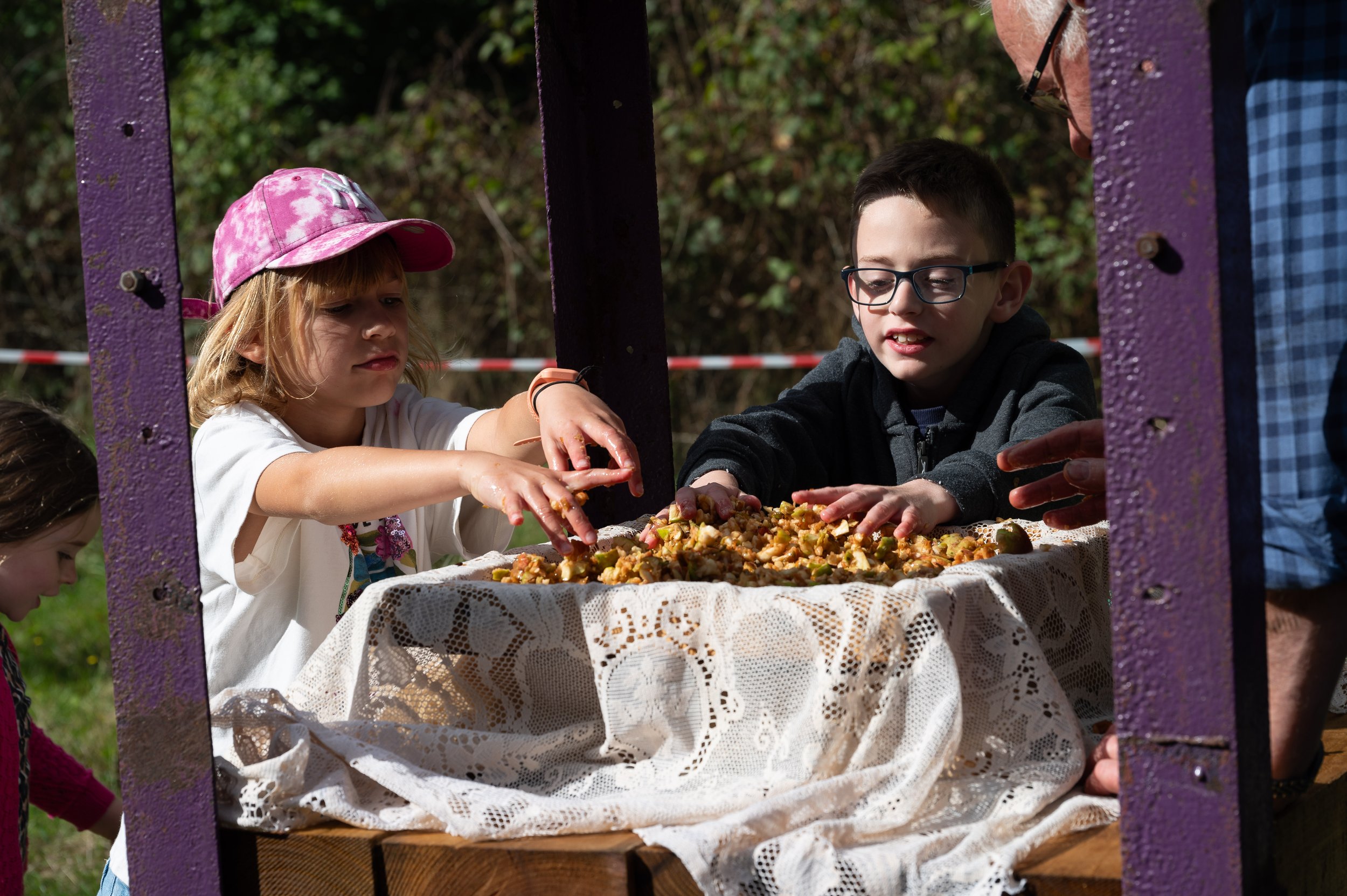
Apple pressing at COAM’s Harvest Weekend
When life gives you apples… press them
Apple pressing offered another solution to one of harvest's great problems: what do you do when dozens of trees produce fruit at the same time?
Pressing allowed large quantities of apples to be processed relatively quickly.
The apples could first be crushed before pressure was applied to release their juice. Fresh juice could be enjoyed immediately, while fermentation allowed it to be turned into cider and kept for considerably longer.
It was an effective way of transforming a highly seasonal crop into something useful beyond the few weeks when the fruit was ripe.
And importantly, an apple did not need to look perfect to be useful. A fruit that was bruised, oddly shaped or unsuitable for storing could still yield juice.
Discover autumn traditions at Chiltern Open Air Museum
Apples offer a surprisingly rich way of exploring rural history.
Behind something as ordinary as an apple lies a story of changing seasons, unpredictable weather, wildlife, food preservation, traditional skills and centuries of folklore.
This autumn, you can discover some of those traditions for yourself at Chiltern Open Air Museum's Harvest Weekend on 26 and 27 September 2026.
See traditional apple pressing and enjoy a weekend celebrating the skills, activities and rhythms of rural life as the Museum moves into autumn.
And next time you see an apple tree with hardly any fruit on it, don't write it off.
It might simply be saving its energy for next year.