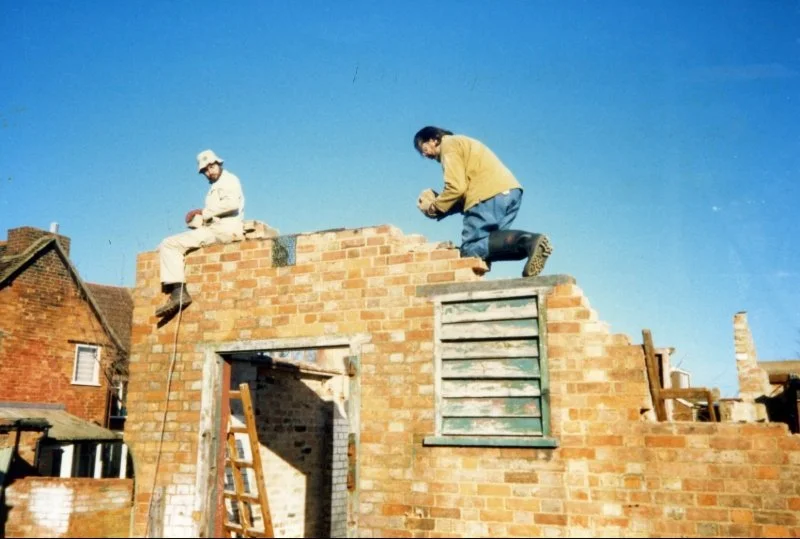
Kempston Slaughterhouse being disassembled
Originally located behind the butcher’s shop at 74 High Street, Kempston, this slaughterhouse faced demolition as part of a redevelopment project before being rescued and relocated to Chiltern Open Air Museum in 1988.
We think the building dates back to the nineteenth century, but its exact age is unknown. It was last used around 1935, and sadly, little is known about the people who worked here or the animals that passed through. Like many similar buildings, it was a quiet but important part of local life, helping to supply food to the community.
A Building Designed for Practical Work
The slaughterhouse tells an interesting architectural story. The ground floor is constructed with handmade late nineteenth-century bricks on the exterior, while the internal walls feature twentieth-century machine-made bricks, suggesting later alterations or repairs as the building continued to be used.
The first floor is made with a softwood timber frame and covered with featheredge cladding. This overlapping cladding style helped rainwater run off the building, a simple but effective method still seen on many historic buildings at the museum.
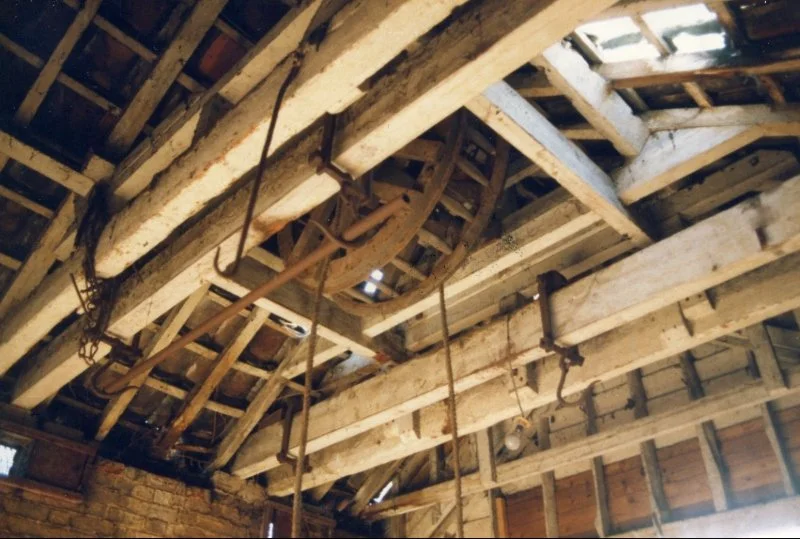
Inside, you can see signs of the building’s original use. A large wooden wheel attached to the roof beams was used to lift carcasses. Channels and drains in the floor helped carry away blood and waste.
Supplying Meat Before Refrigeration
Before refrigeration was common, butchers had to prepare and sell meat quickly to prevent spoilage. That’s why many butchers had small private slaughterhouses near their shops.
Livestock would often be driven ‘on the hoof’ meaning farmers would walk their livestock to the slaughterhouse. where the butchers would process the meat and sell it fresh to customers. This formed an essential link between rural agriculture and urban consumption.
This process might seem unfamiliar or even uncomfortable today, but it shows a time when food production was much more visible and closely connected to local communities.
Thinking About Food Then and Now
Today, the way we produce and consume meat has changed a lot. About 90% of people worldwide eat meat, with global consumption topping 340 million tonnes each year. In the UK, people eat more than twice the global average!
Once rebuilt, the Kempston Slaughterhouse will offer COAM a valuable space for exploring these themes. By understanding historic food systems, visitors can reflect on how their own choices connect to wider environmental and cultural issues.
For those interested in exploring these topics further, the Oxford University Museum of Natural History has created an engaging online exhibition titled Meat the Future.