
Ēostre and the Origins of Easter
Ēostre is an Anglo-Saxon goddess mentioned by the historian Bede in his eighth-century work The Reckoning of Time. He noted that pagan Anglo-Saxons once held feasts in her honour during the month named after her, Ēosturmōnaþ, which is roughly April. Over time, this name became linked to the English word for the season.
As winter ended and daily life became a little easier, communities developed ways of marking the change in season. Over time, these seasonal celebrations mixed with Christian festivals about the Crucifixion and Resurrection of Jesus, creating a rich blend of religious traditions and local customs.
The Lottery of the Reading Maids
Some of these traditions were, and in some places still are, quite unusual. One example is a Berkshire custom called the lottery of the Reading maids. John Blagrave, a distinguished mathematician and astronomer from Reading, left an interesting instruction in his will that started an Easter ritual held every year from 1612 into the nineteenth century.
Blagrave’s bequest required that every Good Friday at Reading Town Hall, three maidservants—one from each of the town’s three parishes—would compete in a lottery for a prize of twenty nobles (a noble was worth six shillings and eight pence). The women had to be of “good character” and have worked at least five years for one employer. Lots were drawn to pick the winner, and the two unsuccessful candidates were allowed to enter the following year’s lottery.
Easter Lifting and Heaving
In the north-west of England and parts of the Midlands, a livelier Easter custom was practised for centuries. Called Easter lifting or Easter heaving, men would lift women on Easter Monday, and women would return the favour on Easter Tuesday. It was like giving someone “the bumps” on their birthday: people crossed their arms and held hands to make a kind of human net, which they used to lift and bounce each other. One story even says King Edward I was lifted this way in 1290, when seven ladies of the court burst into his chamber on Easter Monday.
Pace Eggers and Seasonal Performances
In other places, groups called Pace Eggers went from house to house performing seasonal songs and plays. A typical verse went like this:
There’s one, two, three jolly lads all in one mind,
We have come a-pace egging, we hope you’ll prove kind.
We hope you’ll prove kind with your eggs and strong beer,
And we’ll come no more nigh you until the next year.
These Pace Egg Plays, widely performed in Yorkshire and Lancashire, often focused on themes of death and resurrection. The performers, also called Jolly Boys in the North East, wore bright costumes decorated with paper. While collecting eggs was one reason for their visits, the plays became lively community entertainment, featuring comic characters like Old Tosspot and Betsy Brownbags, as well as topical figures such as Lord Nelson.
Egg Games and Popular Customs
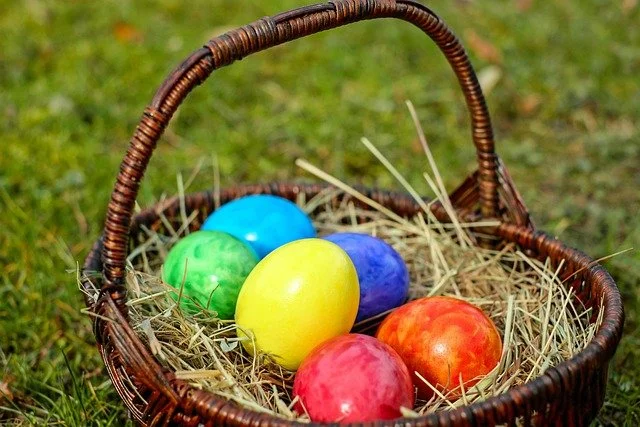
Egg-related traditions are still some of the most recognisable Easter customs today. Egg rolling usually involves racing decorated eggs down a steep hill or across a lawn using sticks. Egg hunts challenge children to find hidden eggs, while egg tapping contests test which egg has the strongest shell. In some places, egg dances were held, where people had to dance among eggs without breaking them—sometimes even while blindfolded.
Church Rituals Before the Reformation
Not all Easter traditions were secular. Before the Reformation, churches followed several ceremonial practices that have since disappeared. One was the “watching of the sepulchre,” where the crucifix and sacred items were placed in a recessed niche, often in the north wall of the chancel, from Good Friday until Easter Day. This symbolised Christ’s burial and resurrection.
After Mass, altar tables were stripped of their coverings and washed with water and wine, then scrubbed with sharp twigs. These actions symbolised the blood and water from Christ’s wounds, while the twigs stood for the crown of thorns.
Renewal, Belief and Continuing Traditions
Although many church customs declined after the Reformation, Easter has continued to inspire folklore, tradition, and religious observance. Beliefs like needing to wear new clothes at Easter—or risk bad luck for the year ahead—show how deeply seasonal renewal and celebration remain part of popular culture.