
Celebrating World Bee Day
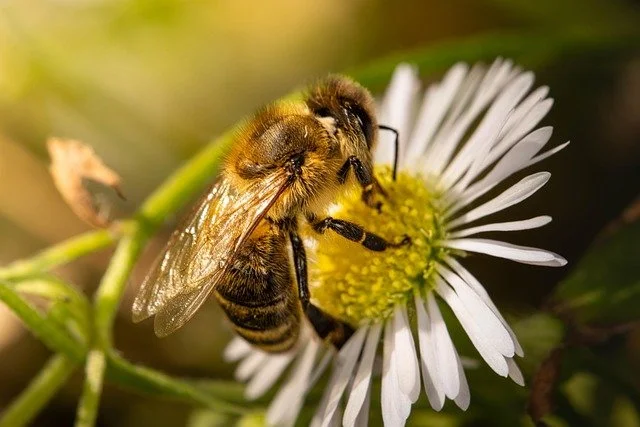
We love the bee colonies that live at Chiltern Open Air Museum. Looked after by a local beekeeper, the hives provide the honey we sell in the Museum shop and the bees act as pollinators for our gardens and crops. Occasionally a swarm will happen when new queens leave an existing colony and settle on a tree or hedge. This is when our expert beekeeper will catch the swarm in a large box and move it to a new hive - not a job for the fainthearted!
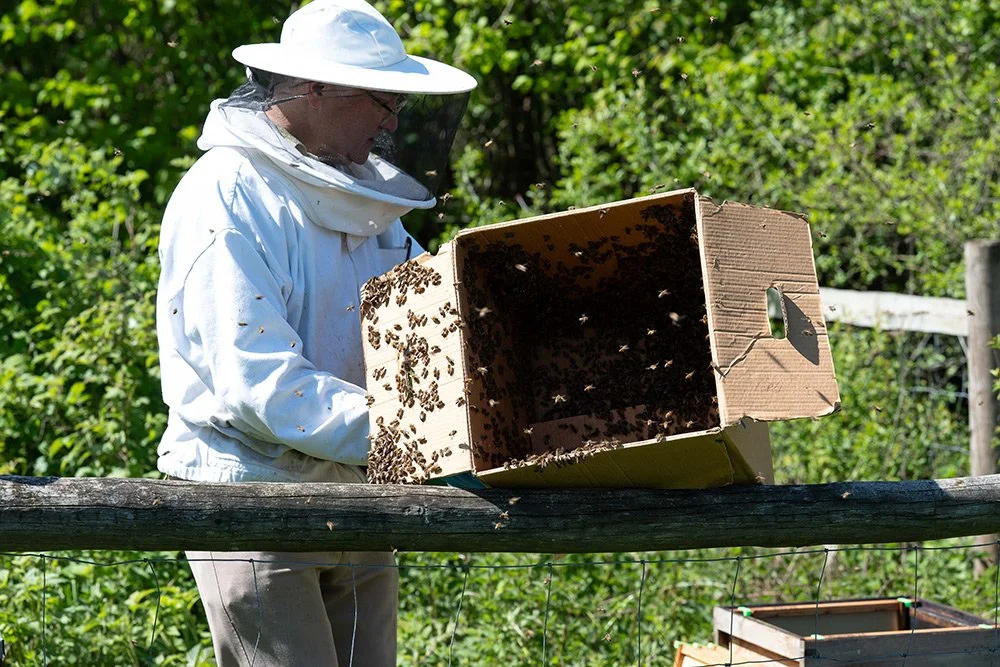
If you spot a swarm during your visit let the Museum staff or volunteers know and don’t go near it.
Our hives are tucked away in a special area on site, so that visitors don’t disturb the colonies. Stay well away if you spot the active hives.
What is World Bee Day?
20th May is World Bee Day. This year’s theme "Bee together for people and the planet" highlights how traditional knowledge and modern technology can secure a sustainable future for both pollinators and human livelihoods.
World Bee Day raises awareness of the essential role that bees and other pollinators play in keeping people and the planet healthy.
The UN selected May 20th to mark the birthday of Anton Janša, an 18th-century pioneer of modern beekeeping. Since 2017 the date has been used to raise awareness of the vital role bees and pollinators play in ecosystems and food security.
How You Can Help Bees
You can support the local bee population by planting bee-friendly wildflowers, avoiding pesticide use, and participating in initiatives like "No Mow May" to support pollinators.
The Museum’s gardens have bee-friendly flowers to encourage them to visit our crops and we don’t use pesticides on site. Some of our green spaces are left to grow long, to give pollinators and bugs safe places to hide and our chalk downland meadow is maintained to make this special environment a perfect home for many native species.
Bee Facts
Bees fly at around 15–20 mph.
They beat their wings 11,400 times per minute, causing the "buzzing" sound.
A hive can contain up to 80,000 bees
Due to its low moisture and acidic pH, honey can remain edible for thousands of years.
Bees are blind to the colour red but can see ultraviolet light, allowing them to spot patterns on flowers that are invisible to humans.
Bumblebees leave a scent-based footprint on flowers, allowing them to distinguish between their own scent and that of other bees to avoid already-visited flowers.
Returning foragers perform a "waggle dance" to tell other bees the precise direction and distance of food sources.
A single bee can visit up to 2,000 flowers in a single day, and half a kilogram of honey requires over 2 million flower visits.
Honey bees sleep between 5 and 8 hours a day, mostly at night when darkness prevents them from going out to collect pollen and nectar.
A strong colony of around 60,000 bees flies the equivalent distance from earth to the moon everyday!