On selected days during the year you’ll find our volunteers Jenny and Steve baking bread in the Museum’s 18th Century Leagrave Cottage. This fascinating process produces tasty warm loaves, fresh from the brick built oven.
Museum volunteer Jenny Templeton leads us through the bread baking process.
Preparing the Fire and Heating the Oven
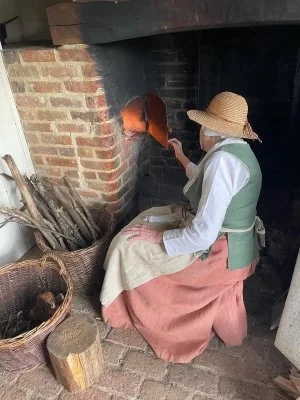
To make the bread first we need to prepare the fire. Dry dead wood would be gathered from the woods. Usually two baskets of thick and thin branches would fuel the fire needed to get the bread oven hot. A small fire is started in the oven and gradually fed with the dry wood. The fire is spread across the oven floor until all that remains is the glowing embers. It usually takes about two hours to heat the oven prior to baking the loaves.
Making the Bread Dough
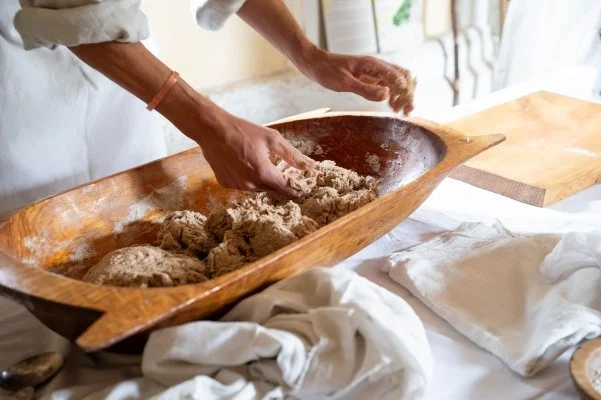
A mixture of flour, salt, yeast and warm water is mixed together by hand in a wooden ‘trow’.
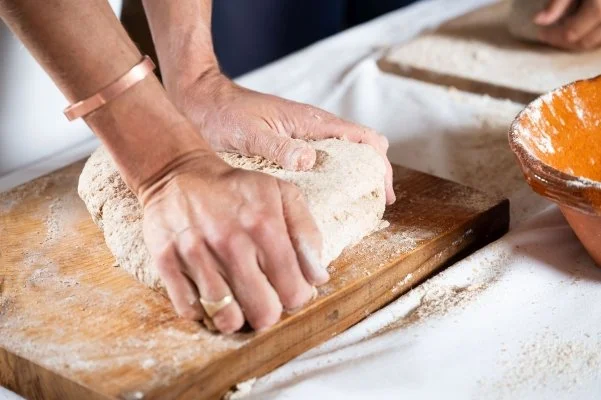
The soft sticky dough is kneaded until the dough is smooth and resists tearing when stretched.
The dough is put back into the trow, covered with muslin and left to rise for about an hour or more.
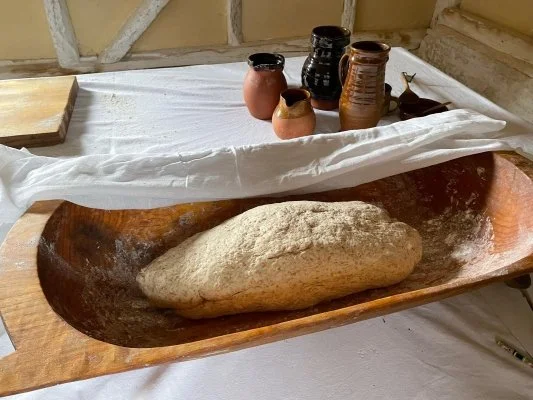
Forming the Loaves
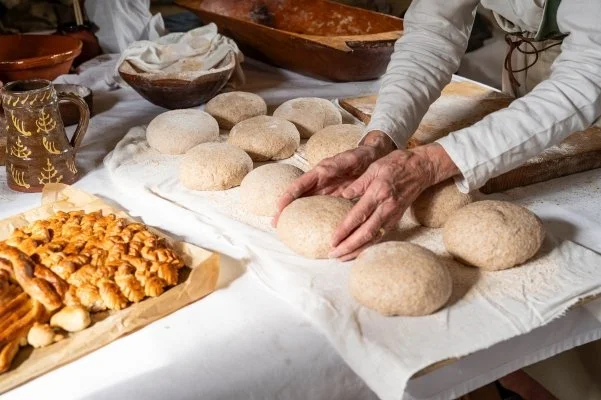
When the dough is risen it is divided into loaves (usually we make 12), placed on a board covered with muslin and left to prove for about 45 minutes to an hour.
Checking the Oven Temperature
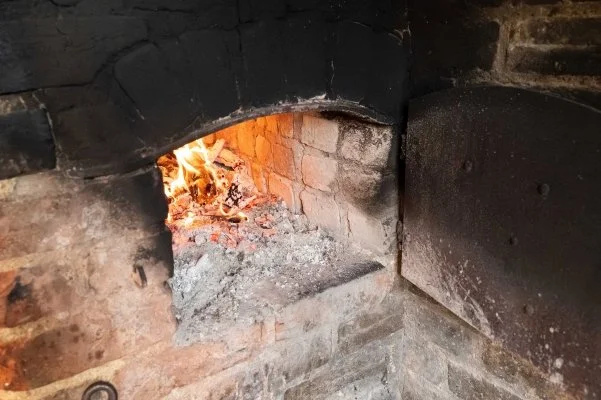
A little flour sprinkled on the oven walls should quickly turn brown and not burn.
It’s said that in Buckinghamshire a stone set into the back of the oven would change colour to indicate the temperature and was traditionally know as the ‘wiseman’.
Preparing the Oven for Baking
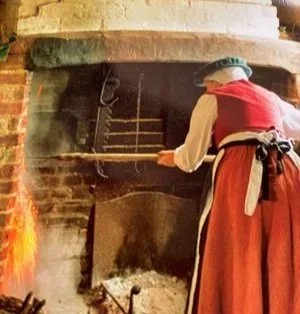
The hot embers are raked out with a ‘scuffle’ - a long-handled hoe. The oven base is cleaned with a wet mop, basically rags on a long stick sometimes known as a ‘mawkin’.
The risen/proved loaves are carefully placed in the oven using a wooden ‘peel’. The oven door is closed and sealed with clay.
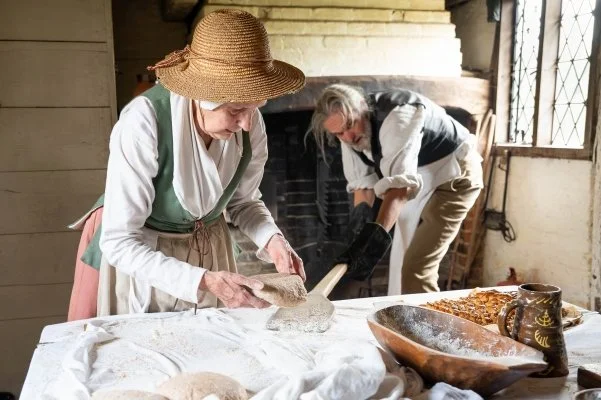
I have recently learnt from a visitor to the Museum that when he was young his local baker would seal the oven door with leftover dough. The pieces of baked dough were given to village children.
Removing the Loaves from the Oven
The loaves usually take about 35 to 50 minutes to bake. They are removed from the oven using the peel. Sometimes the loaves are joined together. Hopefully the loaves are brown, well risen, crisp and sound hollow when tapped on the base.
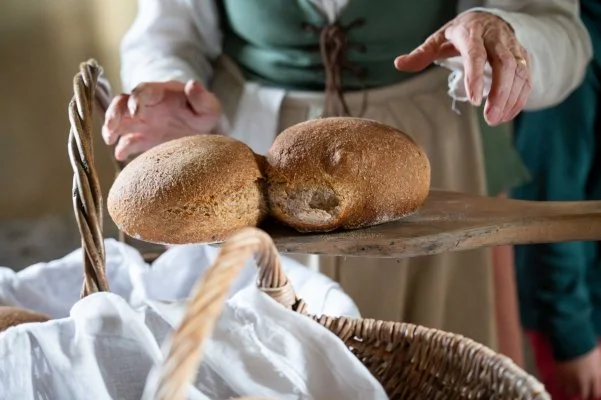
The base of the loaves may still have some ash on them. In earlier times the top of the loaves were for the gentry (or ‘uppercrust’) and the ashy base for the poor.
Using the Residual Heat
None of the heat of the oven would go to waste. After the bread is removed pies and tarts would be baked in the oven, before putting in a pottage/stew in a lidded cast iron cauldron which would be left to cook overnight.
I really enjoy and love baking bread traditionally. I think since 2013 I have baked bread in Leagrave about 40 times. In recent years with my very enthusiastic helper Steve.
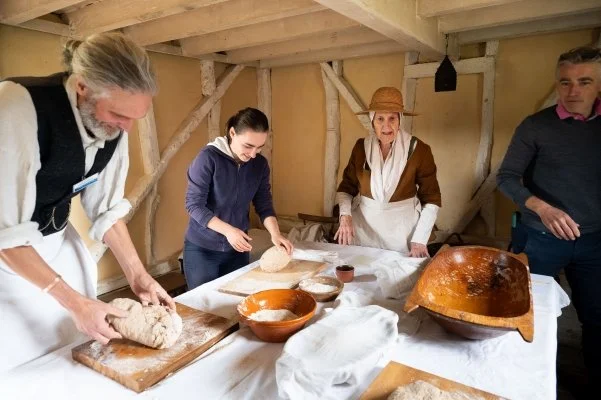
I’m also delighted to say that I often have help from some enthusiastic young people and visitors to the Museum.
Jenny will be leading us through the history of bread making in next week’s blog.