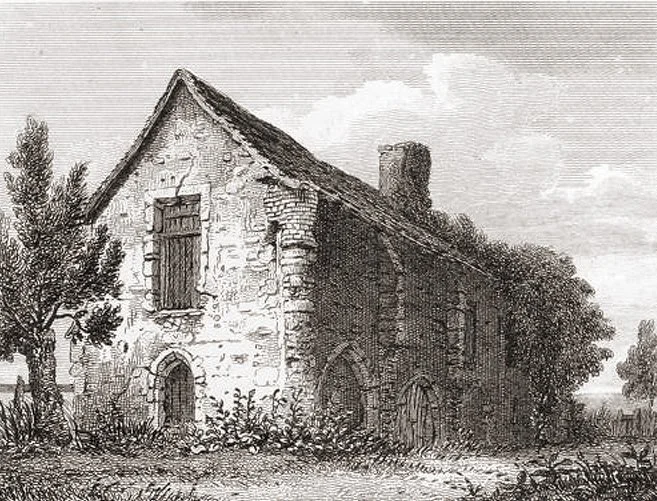
J. Greig, from a Drawing by F. W. L. Stockdale - Storer, James Sargant (1816) "Abbey at King's Langley, Hertfordshire" in the Antiquarian Itinerary, London, Public Domain, Wikimedia
Did you know that the Hertfordshire village of Kings Langley was once home to a royal palace, a medieval friary and generations of English kings? Today, little remains of its royal past, but during the Middle Ages, Kings Langley was an important centre of royal life in the Chilterns.
A Royal Hunting Lodge
The village's royal connections date back to the reign of Henry III (1216–1272), when a hunting lodge known as Little London stood between the River Gade and the main road. Surrounded by a moat, the lodge formed part of the royal hunting grounds.
Little London was still in use in the early 14th century. In 1312, Edward II allowed Dominican friars to stay at the lodge while their new friary was being built nearby. The site of the hunting lodge, including its mound and moat, was later recorded between the canal and Watford Road.
From Queen's Langley to Kings Langley
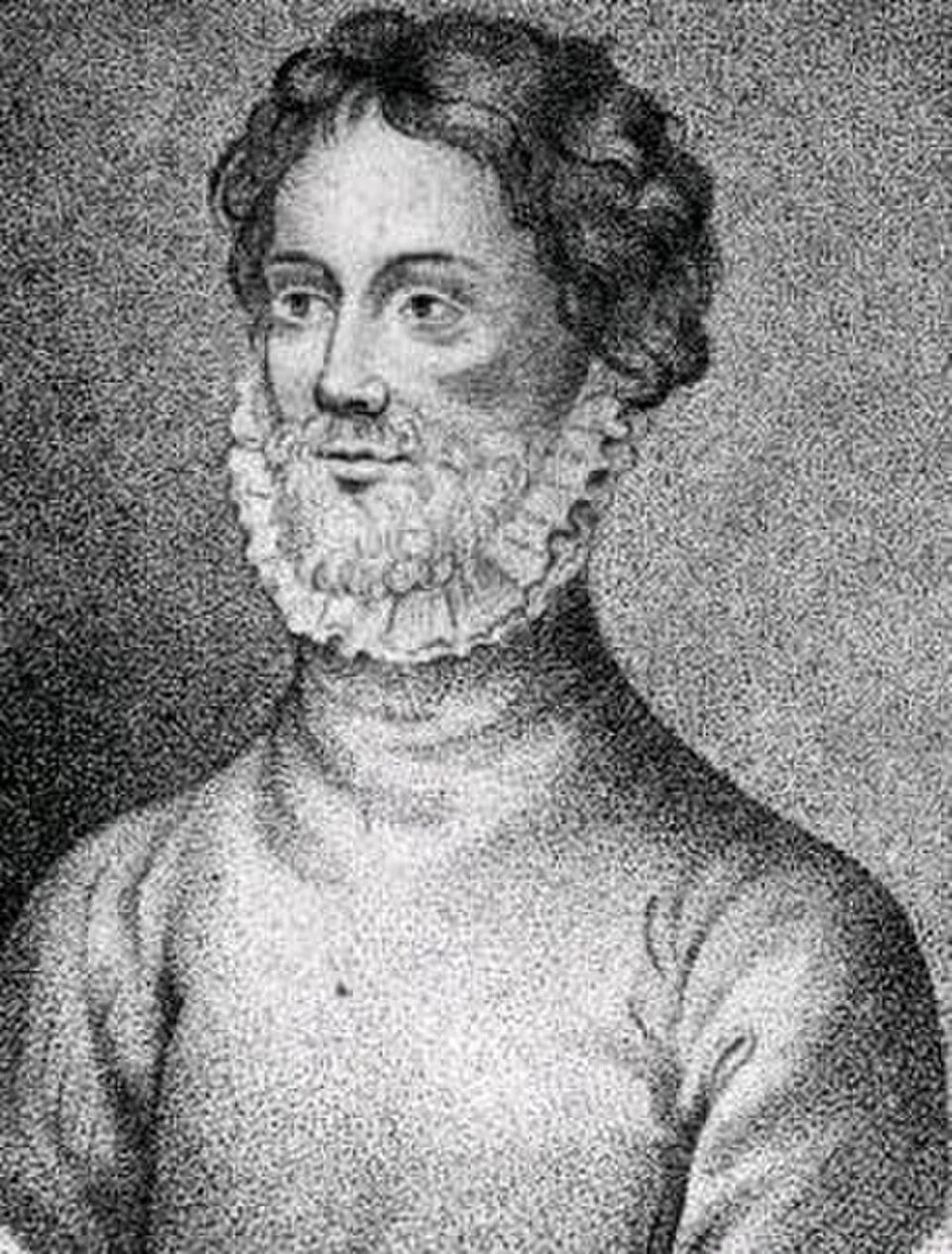
Silvester Harding, Edmund of Langley, 1793, Public Domain, Wikimedia
Around 1276, Eleanor of Castile, wife of Edward I, acquired the manor of Langley. A royal palace was established on the hill overlooking the village, with a deer park stretching out to the south.
The village became known as Langley Regina, meaning 'Queen's Langley', distinguishing it from nearby Abbots Langley.
Following Queen Eleanor's time, it became known as Kings Langley, reflecting its growing importance as a royal residence.
During the Black Death in 1349, Edward III used Kings Langley Palace as his seat of government, retreating from London as the plague spread across the country.
Kings Langley Palace was home to several generations of Plantagenet kings and their families. It was also the birthplace of Edmund of Langley in 1341, a son of Edward III who would later become the first Duke of York and founder of the House of York.
The palace even has a connection to Shakespeare: Act III, Scene IV of Richard II takes place in a garden at Langley, where the Queen overhears gardeners discussing the troubled state of the kingdom.
A Medieval Friary and an Unusual Clock
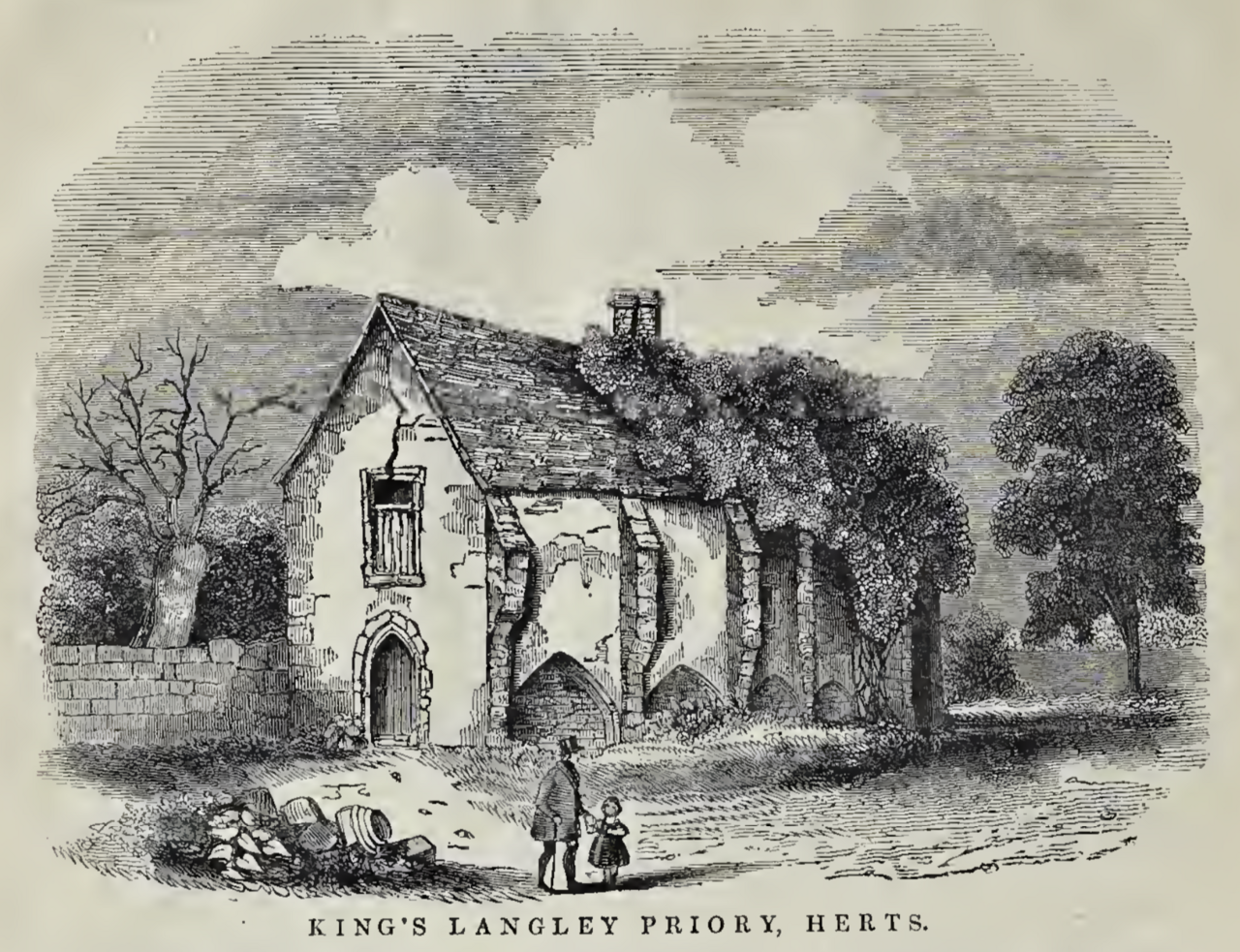
By 'a correspondent at King's Langley' - The Builder, volume 2, number LIII, page 66, 10 February 1844, Public Domain, Wikimedia
In 1308, Edward II founded a Dominican friary just north of the palace. The friary became an important religious centre with close connections to the royal family and was later used as a burial place for members of the Plantagenet dynasty.
One particularly interesting detail is that in 1368, Edward III had a clock installed in the friary church that could strike the hours.
Today, we take clocks for granted, but in the 14th century, mechanical clocks were still a relatively new technology. A clock capable of striking the hours would have been an impressive addition to the friary and a reminder of the wealth and importance of its royal patrons.
A Royal Landscape in the Chilterns
Kings Langley was not the only place in the Chilterns with royal connections. Nearby Berkhamsted Castle and Ashridge also played important roles in medieval royal life.
Together, Berkhamsted, Ashridge and Kings Langley formed an extraordinary landscape of royal residences, religious foundations, hunting grounds and estates.
What made Kings Langley particularly special was the concentration of royal history in one small area. It was home to a major palace, a royal friary and a burial place for members of the Plantagenet dynasty, as well as being the birthplace of a future Duke of York.
Although much of medieval Kings Langley has disappeared, its history offers a fascinating glimpse into a time when the Chilterns were closely connected to the English royal court.
Interestingly, Kings Langley was also historically known as Chiltern Langley, one of several names associated with the village over the centuries, alongside Queen's Langley and King's Langley. These changing names reflect its long history and help distinguish it from neighbouring Abbots Langley.
Next time you pass through Kings Langley, it's worth remembering that this quiet Hertfordshire village was once a place where kings lived, royal children were born and important events in medieval history unfolded.