
The Chilterns are home to an extraordinary variety of wildlife. Ancient woodlands, rolling chalk grasslands, farmland, rivers and areas of heathland create a patchwork of habitats where hundreds of different plants and animals can thrive.
But the wildlife of the Chilterns hasn't remained unchanged. Alongside the species that have lived here naturally for centuries, several plants and animals have been introduced from elsewhere. Some have settled into the landscape with relatively little impact, whilst others have become invasive, changing habitats and putting pressure on the native wildlife.
Wildlife of the Chilterns
Walk through the Chilterns, and there is wildlife almost everywhere you look.
Woodlands and farmland provide homes for familiar native mammals including badgers, red foxes, hedgehogs, roe deer and brown hares. As evening approaches, bats also emerge to feed, with species such as the common pipistrelle making use of mature trees and old buildings for roosting.
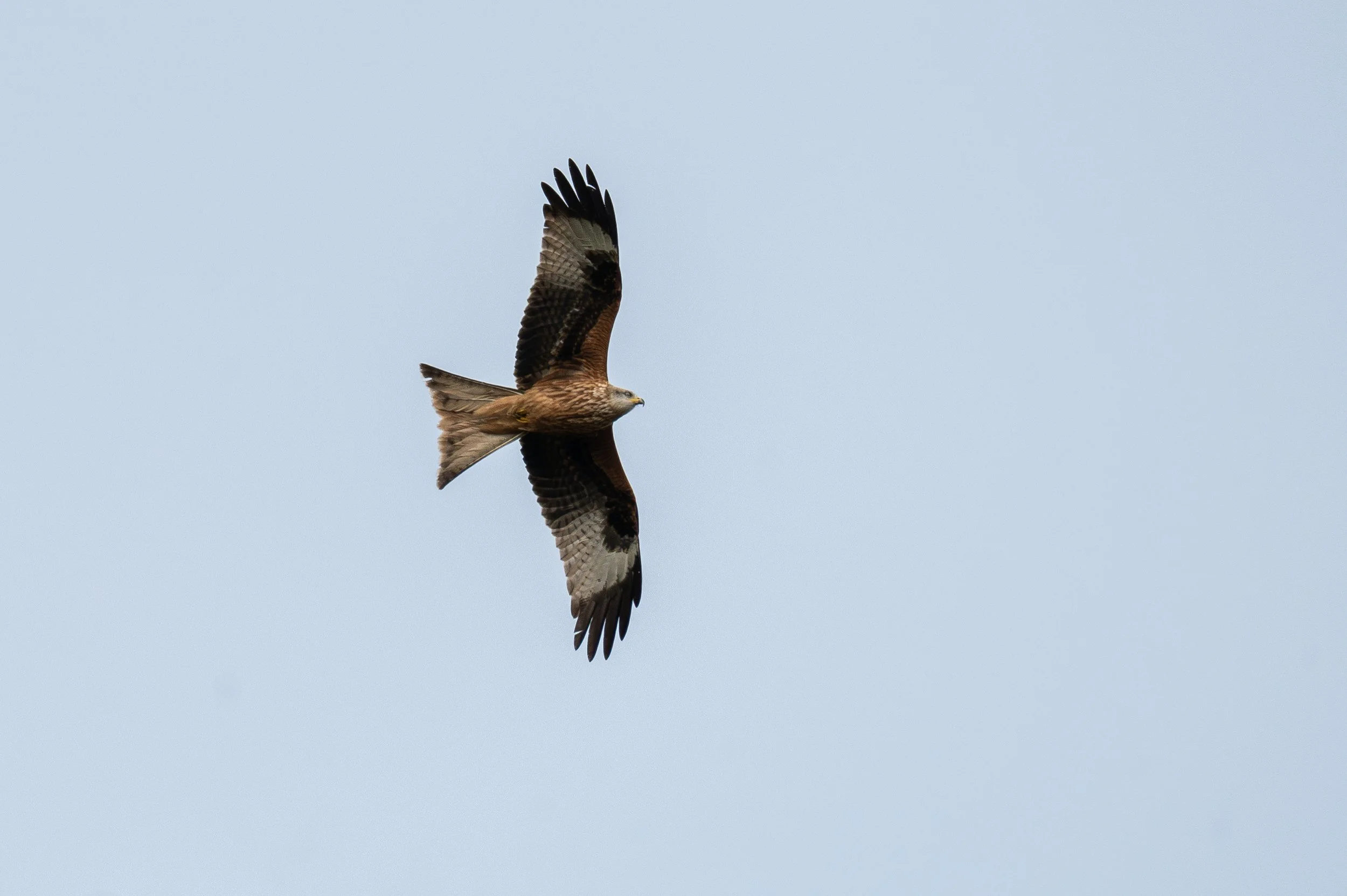
Look upwards, and you may spot one of the area's most recognisable residents: the red kite. Today, red kites are a familiar sight circling above the Chiltern Hills, but this wasn't always the case. After disappearing from much of England, they were successfully reintroduced to the Chilterns in the 1990s. Their return becoming one of the area's great wildlife conservation success stories.
The Chilterns are also home to birds including great spotted woodpeckers, nuthatches, buzzards and barn owls, each making use of the area's varied woodland, farmland and grassland habitats.
A landscape rich in plants
The Chilterns' woodlands are particularly associated with beech, alongside native trees such as English oak and ash. In spring, woodland floors can become carpets of bluebells, while cowslips and other wildflowers bring colour to grassland and field margins.
Chalk grassland is one of the Chilterns' most important habitats. Despite its often simple appearance, healthy chalk grassland can support an incredible variety of plants, including orchids such as the bee orchid.
Where there are wildflowers, there are insects too. Butterflies, including the chalkhill blue, Adonis blue and marbled white, can be found on flower-rich chalk grasslands. Their survival is closely connected to the way these habitats are managed, making grazing and scrub control important parts of conservation work.
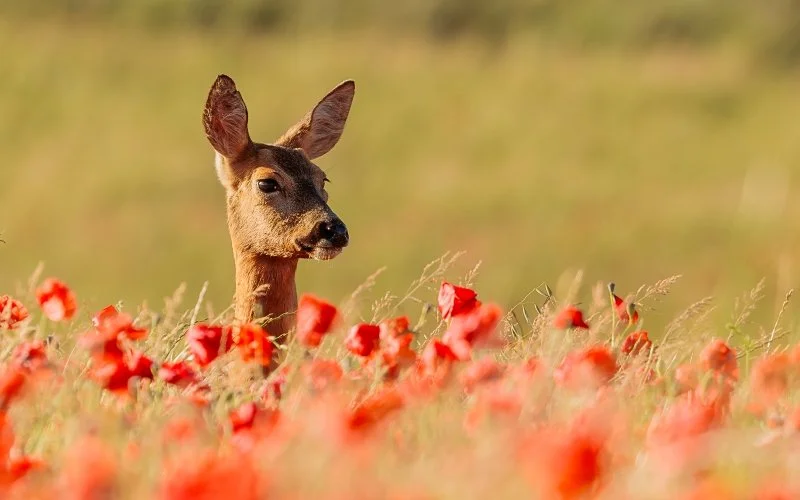
Roe Deer amongst the poppies Photo Credit: John Dobson
When new arrivals become a problem
Not every species found in the Chilterns is native to Britain. Over the centuries, plants and animals have been introduced to the landscape, sometimes deliberately and sometimes by accident.
Of course, being non-native doesn't necessarily mean a species is harmful. However, some introduced species can become invasive, spreading rapidly and putting pressure on native wildlife and the habitats they depend on.
One of the most familiar examples is the grey squirrel. Originally introduced from North America, grey squirrels are now a common sight in Chiltern woodlands. Although entertaining to watch, they can cause considerable damage by stripping bark from young trees, affecting woodland regeneration. They have also contributed to the decline of Britain's native red squirrel, which is no longer found in the Chilterns.
Deer are another example of how the arrival of new species has changed the local landscape. Of the four deer species found in and around the Chilterns, only the roe deer (Capreolus capreolus) is native. The other three – muntjac (Muntiacus reevesi), fallow deer (Dama dama) and Chinese water deer (Hydropotes inermis) – were all introduced to Britain at different points in history.
Despite their differences in size and appearance, all four species present challenges for woodland management. Without large natural predators to keep populations in check, deer numbers can increase significantly. Their grazing and browsing can prevent young trees from growing and reduce the variety of wildflowers and other plants on the woodland floor.
The muntjac deer, originally from Asia, is particularly notable for its appetite for low-growing woodland plants. Although small, these deer can have a surprisingly large impact on woodland biodiversity, especially where populations are high.
Invaders along our waterways
Rivers and streams face their own challenges.
Himalayan balsam can spread rapidly along riverbanks, forming dense stands that crowd out native plants. Although its pink flowers may look attractive, the plant dies back during winter, potentially leaving areas of bare soil vulnerable to erosion.
Japanese knotweed is another introduced plant capable of forming dense stands that prevent other plants from growing. Once established, it can be extremely difficult to control.
Below the water, signal crayfish present another problem. Introduced from North America, they compete with the native white-clawed crayfish and can carry crayfish plague, a disease that can devastate native crayfish populations. Their burrowing behaviour can also damage riverbanks.
Even some very familiar countryside species have complicated histories. Ring-necked pheasants, for example, are introduced birds. Where large numbers are released for shooting, they can place additional pressure on insects and ground vegetation.
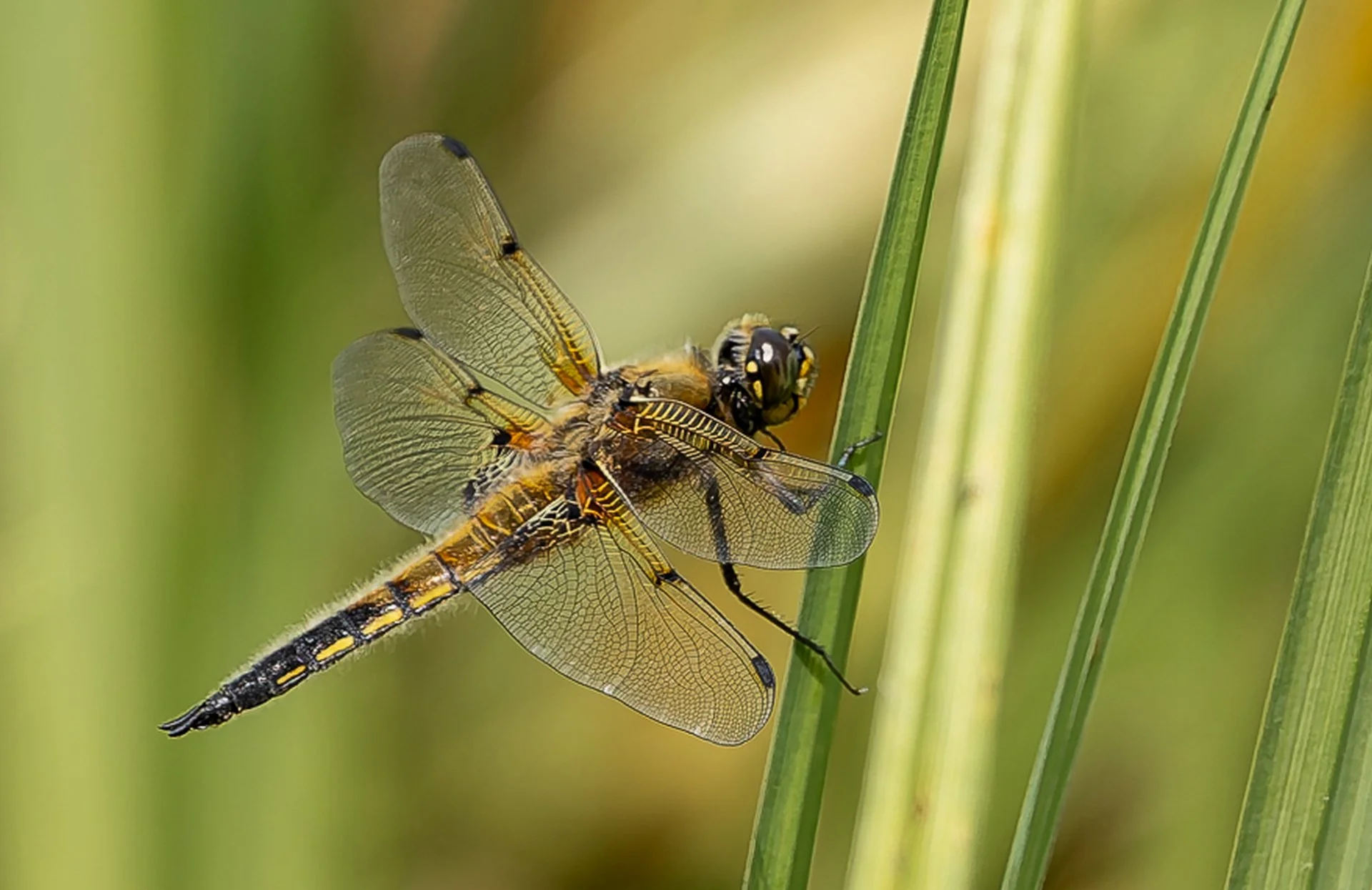
Four Spotted Chaser Photo Credit: John Dobson
Why does it matter?
Healthy ecosystems depend on relationships between many different species.
Beech and oak trees provide food and shelter for insects, birds, fungi and mammals. Wildflowers support bees, butterflies and other pollinators. Birds of prey help regulate populations of smaller animals, while mammals such as badgers can influence the landscape through digging and seed dispersal.
When an invasive species becomes dominant, some of these relationships can be disrupted.
Heavy browsing by muntjac can leave woodland floors with fewer flowers. Grey squirrels can damage young trees. Himalayan balsam and Japanese knotweed can replace diverse plant communities with dense stands of a single species, while signal crayfish can alter freshwater ecosystems and displace native wildlife.
Over time, these individual changes can affect the wider biodiversity of the landscape.
Protecting the Chilterns for the future
Conservation across the Chilterns involves much more than simply protecting individual species. It is about looking after the habitats and connections that allow wildlife to flourish.
Conservation organisations, such as Chilterns National Landscape and the Chiltern Society, landowners and volunteers work across the landscape to restore chalk grasslands, manage woodlands, protect rivers and streams, control invasive species and create wildlife corridors connecting fragmented habitats.
Traditional land management can play an important role too. Grazing, coppicing, hedge management and other practices that have shaped the Chiltern landscape over generations can help maintain valuable habitats when carried out sensitively.
The wildlife we see in the Chilterns today is the result of centuries of interaction between people and the natural environment. By understanding which species belong here, how newcomers are changing the landscape and how habitats can be cared for, we can help ensure the Chilterns remain a rich and varied home for wildlife for generations to come.
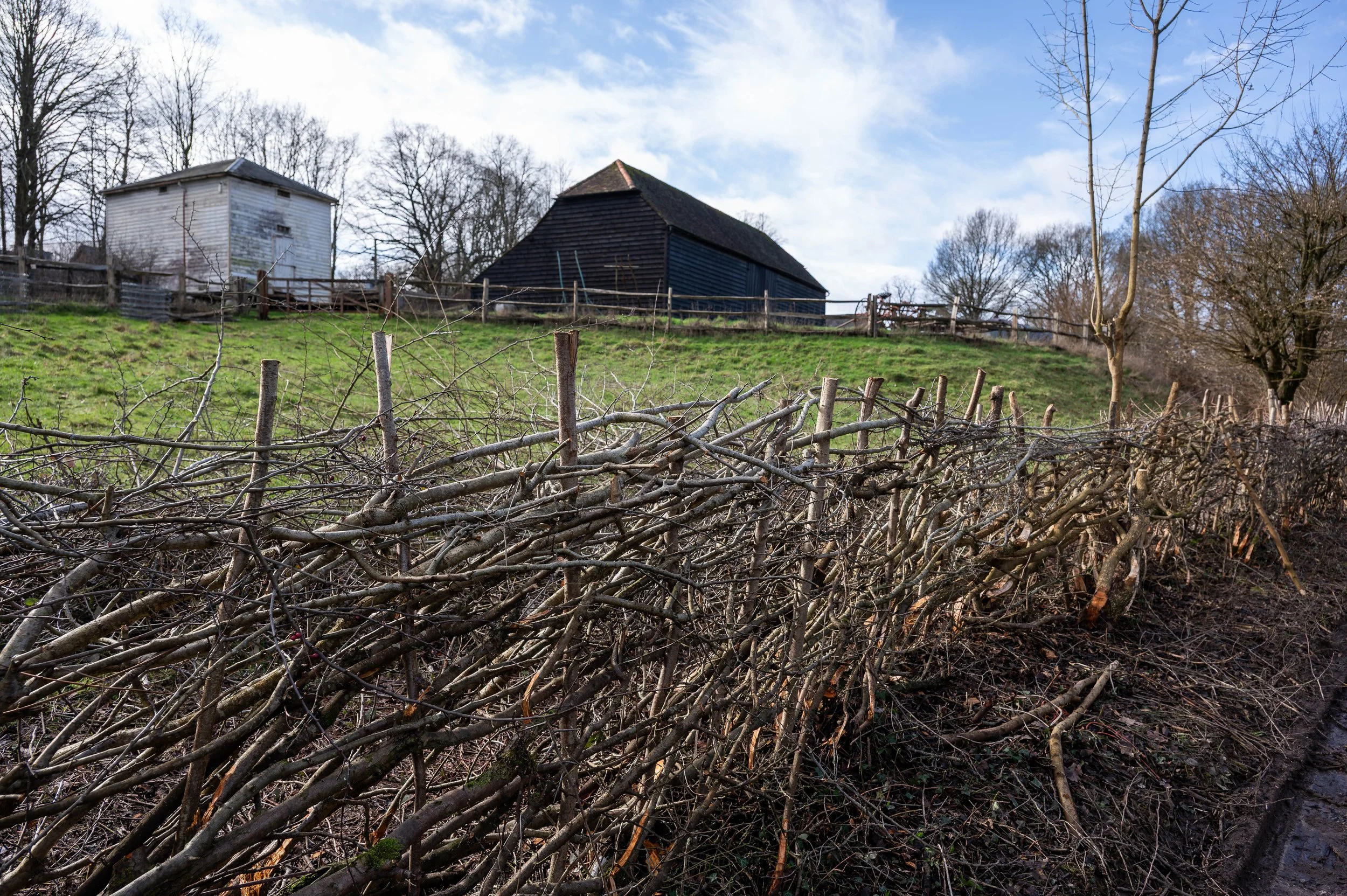
Hedge Management at COAM
Wildlife at Chiltern Open Air Museum
At Chiltern Open Air Museum, we're lucky to be surrounded by the very landscape that makes the Chilterns so special. Across our 45-acre site, historic buildings sit alongside woodland, hedgerows, meadows and open spaces, providing a variety of habitats for local wildlife.
While our historic buildings tell the stories of the people who lived and worked in the Chilterns, the landscape around them has a story of its own. For centuries, people have shaped the countryside through farming, woodland management and traditional rural crafts, all of which have influenced the habitats we see today.
Our site offers plenty of opportunities to slow down and appreciate nature. From birds singing in the hedgerows to butterflies visiting wildflowers in the warmer months, wildlife is an important part of the Museum's character.
Caring for our natural surroundings is also part of looking after the Museum for future generations. By maintaining our green spaces, hedgerows and woodland areas, we can help support local biodiversity while preserving the traditional Chiltern landscape that forms such an important part of our heritage.