
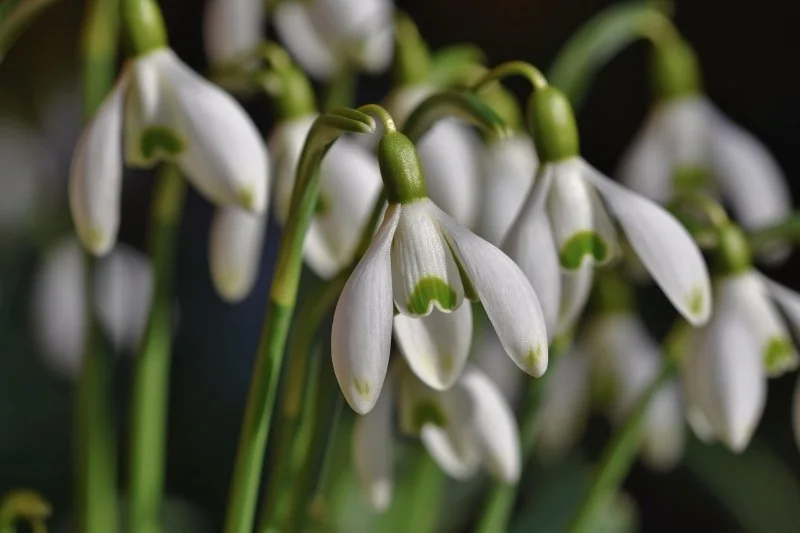
At the Museum the short days of winter are brightened by the appearance of snowdrops around the site. Bursting into bloom around our historic buildings, these early-flowering beauties carpet our gardens and wild spaces.
On average snowdrops bloom on 26 January in the UK (based on the Woodland Trust’s Natures Calendar observations from 2001-2020), but they can flower much earlier in mild weather.
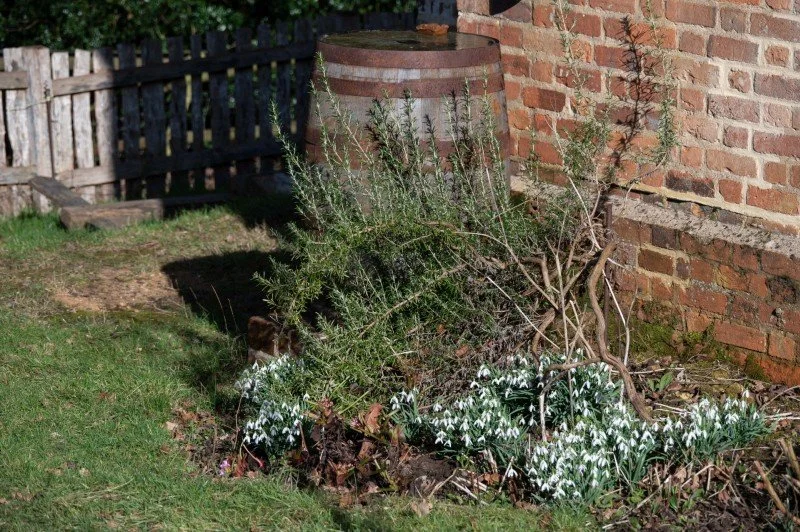
Snowdrops bloom in the Toll House Garden in Feb 2025
When Did Snowdrops Arrive in the UK?
Snowdrops (Galanthus) are not native to the UK, although exactly when they were introduced is unclear. Some sources say that snowdrops were first brought to Britain by the Romans, others say they were grown as an ornamental garden plant as early as the 16th century, but they were not recorded in the wild until the late 18th century.
Earlier Flowering of Plants in the UK
Plants are now flowering around a month earlier, according to a 2022 study from a team at the University of Cambridge, and this is due to climate change.
The study looked at over 400,000 observations for 406 species from Nature’s Calendar, which is maintained by the Woodland Trust. They combined the first flowering dates with instrumental temperature observations and found that the average first flowering date from 1987 to 2019 was a month earlier than the average first flowering date from 1753 to 1986. The timing of first flowering varies from year to year, mainly driven by temperatures. But in the long term, their research showed that a 1.2C rise in temperature brought spring forward by a month.
This means that snowdrops, once known as flowering from February onwards, are now appearing around one month earlier for us than they would have done in the 18th century.
Snowdrop Facts
During the Second World War, British citizens nicknamed American soldiers 'snowdrops' due to their green uniforms with a white cap or helmet.
Their name comes from Greek gala (milk) and anthos (flower), meaning "milk flower".
Snowdrops contain natural antifreeze proteins in their tissue, allowing them to withstand freezing temperatures. During the First World War, these bulbs were harvested to produce antifreeze for military tank engines.