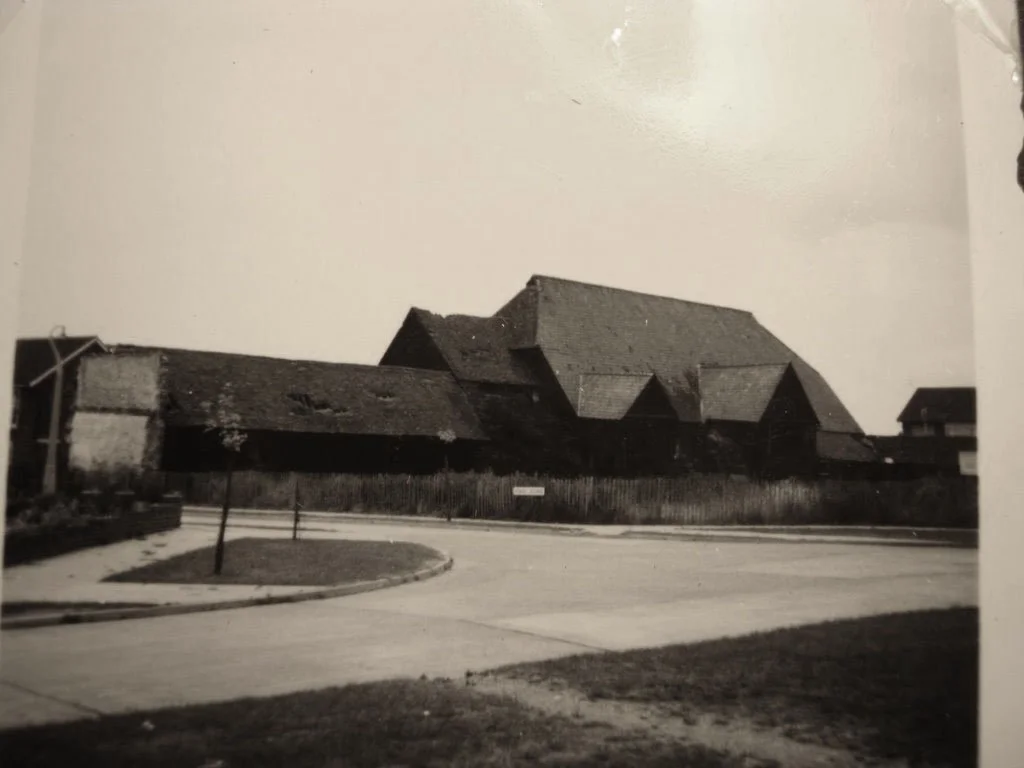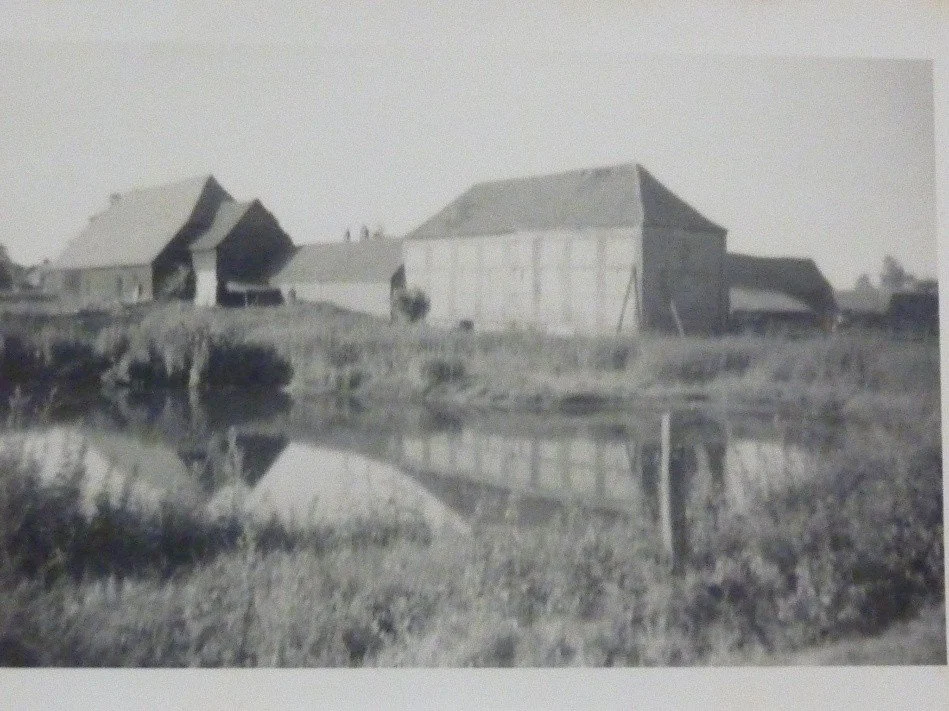
Buildings in Storage: St Julians Barn
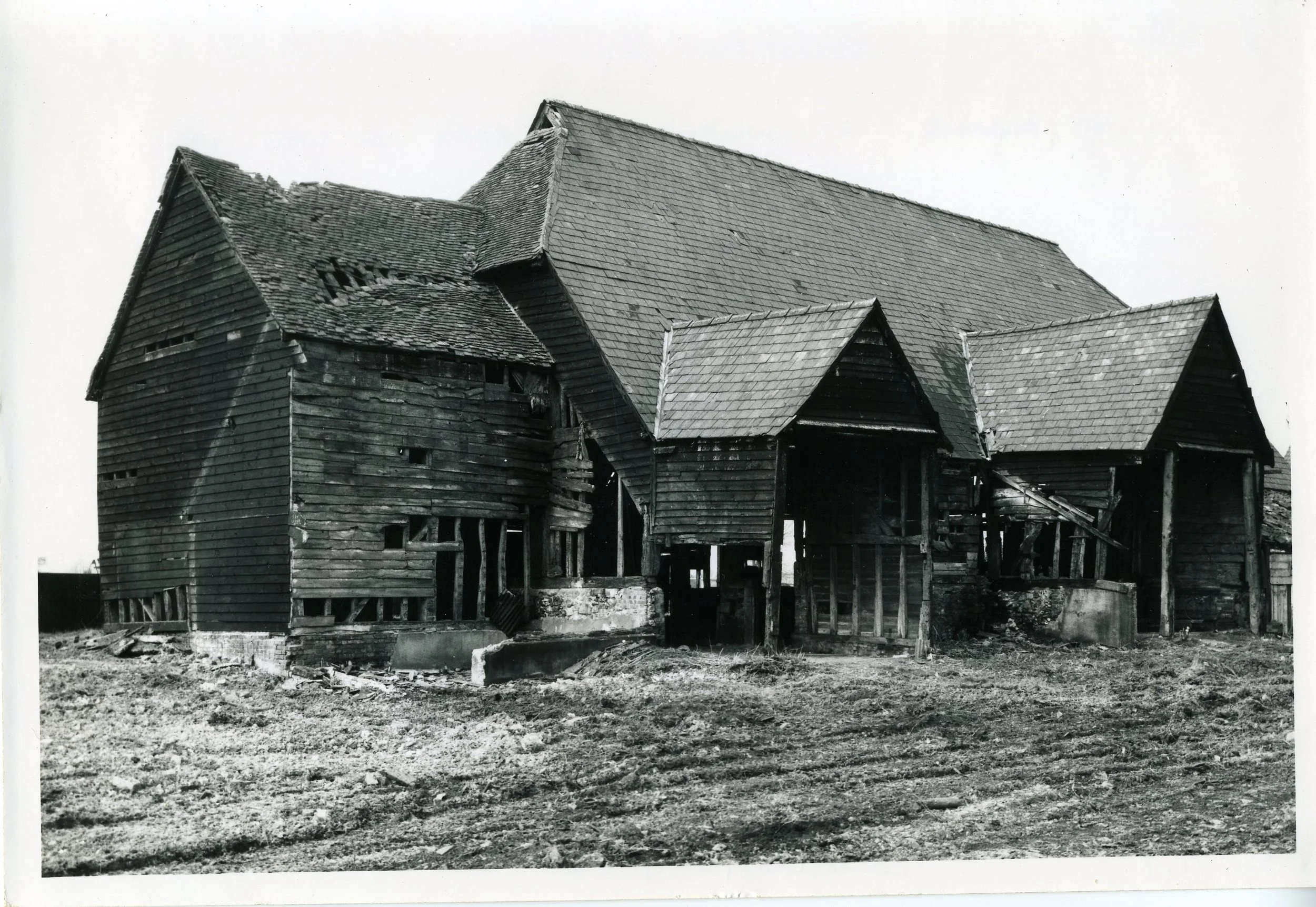
St Julians Barn in situ, Chiltern Open Air Museum Archive
Among the historic buildings stored at Chiltern Open Air Museum is one of the most impressive structures in the collection: St Albans Abbey Barn, more commonly known as St Julians Barn. Vast in scale and rich in history, this medieval barn tells the story of monastic farming, medieval craftsmanship, and changing landscapes over more than six hundred years.
A Barn Built for an Abbey
St Julians Barn was built on the manor of Eywood, land granted to St Albans Abbey in the eleventh century. The site lay to the west of Watling Street, on higher ground overlooking the valley of the River Ver.
The barn formed part of a group of large monastic barns constructed during the fourteenth century on the orders of John de la Moot. These barns were used to store produce from the abbey’s estates, including wheat, barley and other grains. Some of this produce came directly from abbey-owned land, while some was paid as tithes by local tenants.
Dating a Medieval Giant
Pinning down the exact date of the barn’s construction has proved difficult. The elm and oak timbers used in its frame came from fast-growing trees, which means they contain too few growth rings for precise dating. Even so, the barn is thought to have been built around 1390.
The similarities in design and construction suggest that this barn, along with others in the group, was built by the same team of carpenters. Their work produced a structure that was both highly practical and remarkably durable.
Built on an Impressive Scale
St Julians Barn is a five-bay, timber-framed aisled barn with a central porch. Measuring over 24 metres long and 12 metres wide, it is far larger than any of the other barns represented at COAM. Its roof is a single-framed, crown-post structure, half-hipped with two gables and originally covered with clay peg tiles.
When first built, the walls were probably filled with wattle and daub. This was later replaced with horizontal weatherboarding, a change that helped protect the building as centuries passed.
The oak frame stands on a substantial wall base made mainly from flint, mixed with Roman brick and Totternhoe clunch. These materials were likely reused rubble from rebuilding work at the abbey itself, including the Great Gatehouse. Totternhoe clunch, a hard local chalk, was widely used in medieval building and carving. Some of the finest surviving examples can be seen in church fonts around Aylesbury, including one from Weston Turville.
Why St Julians?
The barn takes its name from the surrounding area rather than any direct connection to a saint. Nearby, on Watling Street south of St Albans, stood the Hospital of St Julian, a leper hospital founded in the twelfth century and run by the abbey. Over time, the name St Julians came to describe the wider area, including the farmland on which the barn stood.
From Abbey Farm to Preservation
After the dissolution of the monasteries, the abbey farm was granted to Sir Richard Lee in 1539. It remained in his family until 1649, before passing to John Ellis, who built a farmhouse also known as St Julians. Farming continued on the land for centuries, with the holding eventually spreading across both sides of Watling Street.
By the 1920s, parts of the land were sold for housing development, and in the 1960s the remaining farm was sold. Rather than see the barn demolished, it was dismantled in 1962 and placed into storage by St Albans City Council.
When COAM began acquiring historic buildings, St Julians Barn was an obvious choice. Its age, scale and significance made it a standout survivor of medieval monastic farming. The timbers were moved to the museum site in 1979, where they remain carefully stored today.
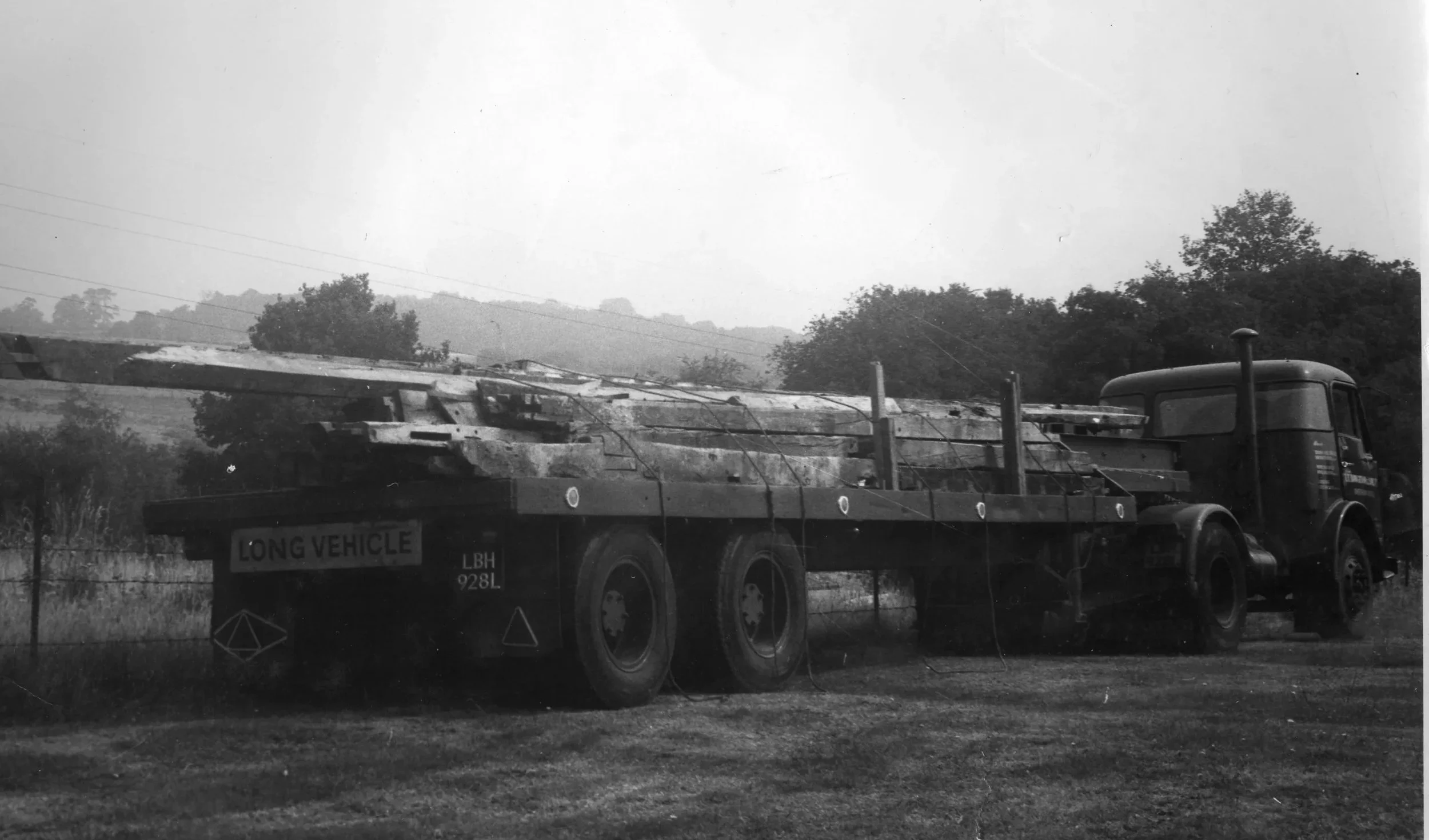
St Julians timbers Arriving at COAM (1979), Chiltern Open Air Museum Archive
Remembered by Those Who Knew It
The last tenant farmer at St Julians was Archibald Muir. His son, Fergus, later shared photographs of the barn taken in the 1950s, including one he took himself at the age of ten. These images offer a rare glimpse of the barn as a working farm building, just before its long journey into preservation began.