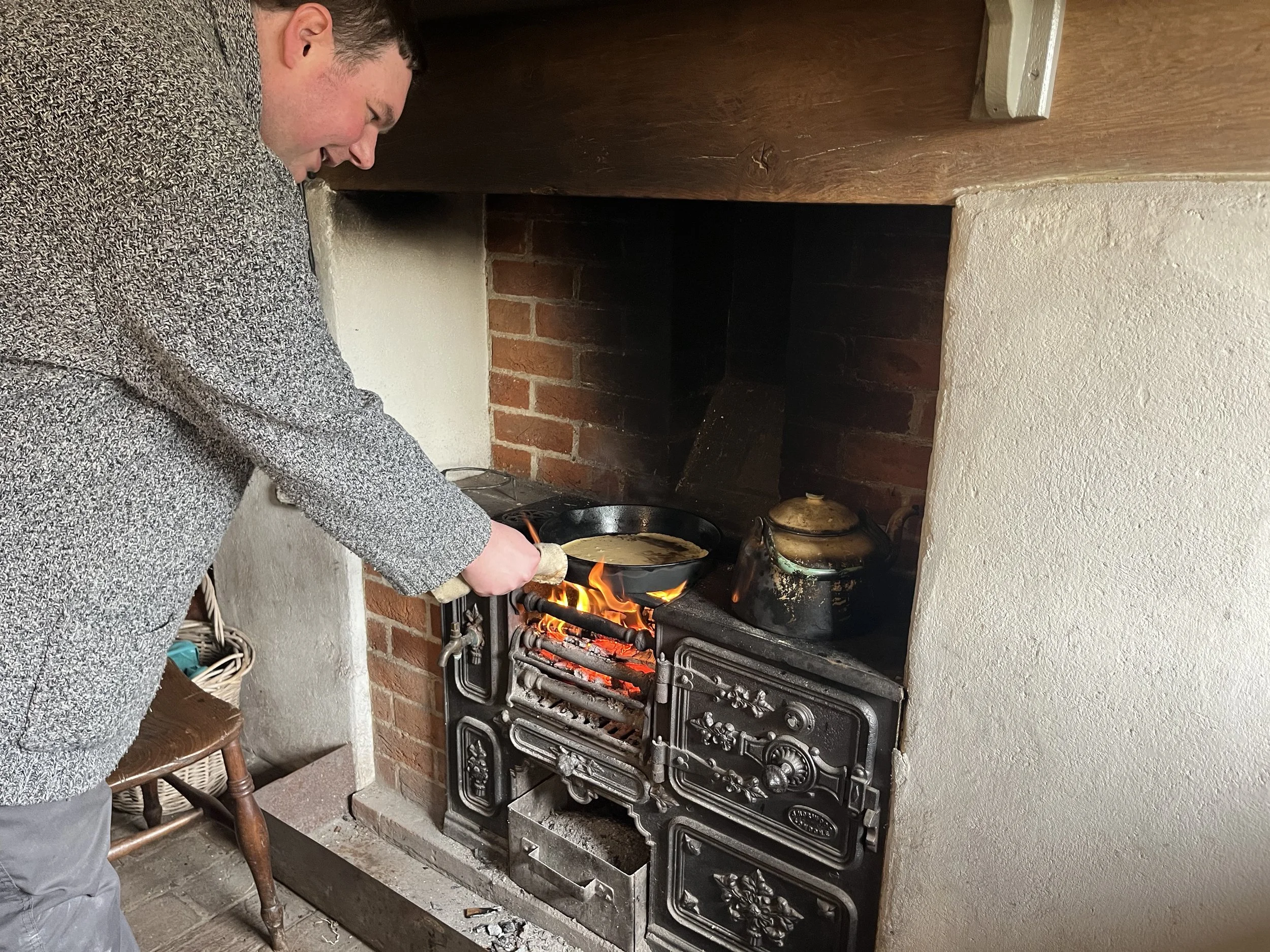
There is something wonderfully comforting about Shrove Tuesday. The scent of batter hitting a hot pan, the squeeze of lemon and sugar, the ritual flipping of pancakes, successfully or not!
Yet behind this familiar tradition lies a much older story. Shrove Tuesday, also known as Pancake Day, marks a turning point in the Christian calendar. It is the final day before Lent begins, traditionally a period of fasting and reflection leading up to Easter.
What Does “Shrove” Mean?
The word shrove comes from the verb “to shrive”, meaning to hear confession and grant absolution. Historically, Christians were expected to confess before the beginning of Lent, which starts on Ash Wednesday and lasts forty days (excluding Sundays).
Shrove Tuesday therefore became a day of spiritual preparation. Parishioners would attend church, confess their sins and settle disputes before entering the more reflective season of Lent.
Alongside spiritual preparation, households also prepared practically using up rich foods that would traditionally be restricted during Lent, such as meat, eggs and dairy products.
Why Do We Eat Pancakes on Shrove Tuesday?
Before Lent began, ingredients such as eggs, milk and butter were used up so that they would not go to waste during the fasting period. These simple ingredients combine to make pancakes, which explains the long-standing association with Pancake Day.
In medieval England, pancakes, sometimes called “fritters”, “flawns” or “fast-even pan puffs”, were cooked on griddles over open hearths. They were often thicker than modern crêpe-style pancakes and lightly sweetened with honey.
By the eighteenth and nineteenth centuries, printed cookery books show increasingly refined recipes. As imported sugar became more widely available from the seventeenth century onwards, sweet toppings grew more popular. Lemon and sugar, now considered the classic British Pancake Day topping, became widespread during the nineteenth century as citrus fruit became more accessible.
What feels like a simple seasonal treat is rooted in centuries of thrift, resourcefulness and religious observance.
Shrove Tuesday Traditions in Buckinghamshire
Buckinghamshire is home to one of Britain’s best-known Pancake Day traditions: the annual race in Olney.
According to local tradition, the event dates back to 1445, when a woman reportedly ran to church on Shrove Tuesday still holding her frying pan after hearing the bell ring — the bell traditionally signalling that it was time to begin making pancakes.
While the precise origins are debated, the race was well established by the nineteenth century. It was revived in 1948 and has been held annually ever since, becoming an enduring symbol of British Shrove Tuesday customs.
Elsewhere in England, Shrove Tuesday was marked by:
The ringing of a “pancake bell” to signal the start of cooking.
Local games and contests.
Communal feasting before the austerity of Lent.
The act of “shroving”, where children or young people visited houses singing rhymes in exchange for food or small gifts.