
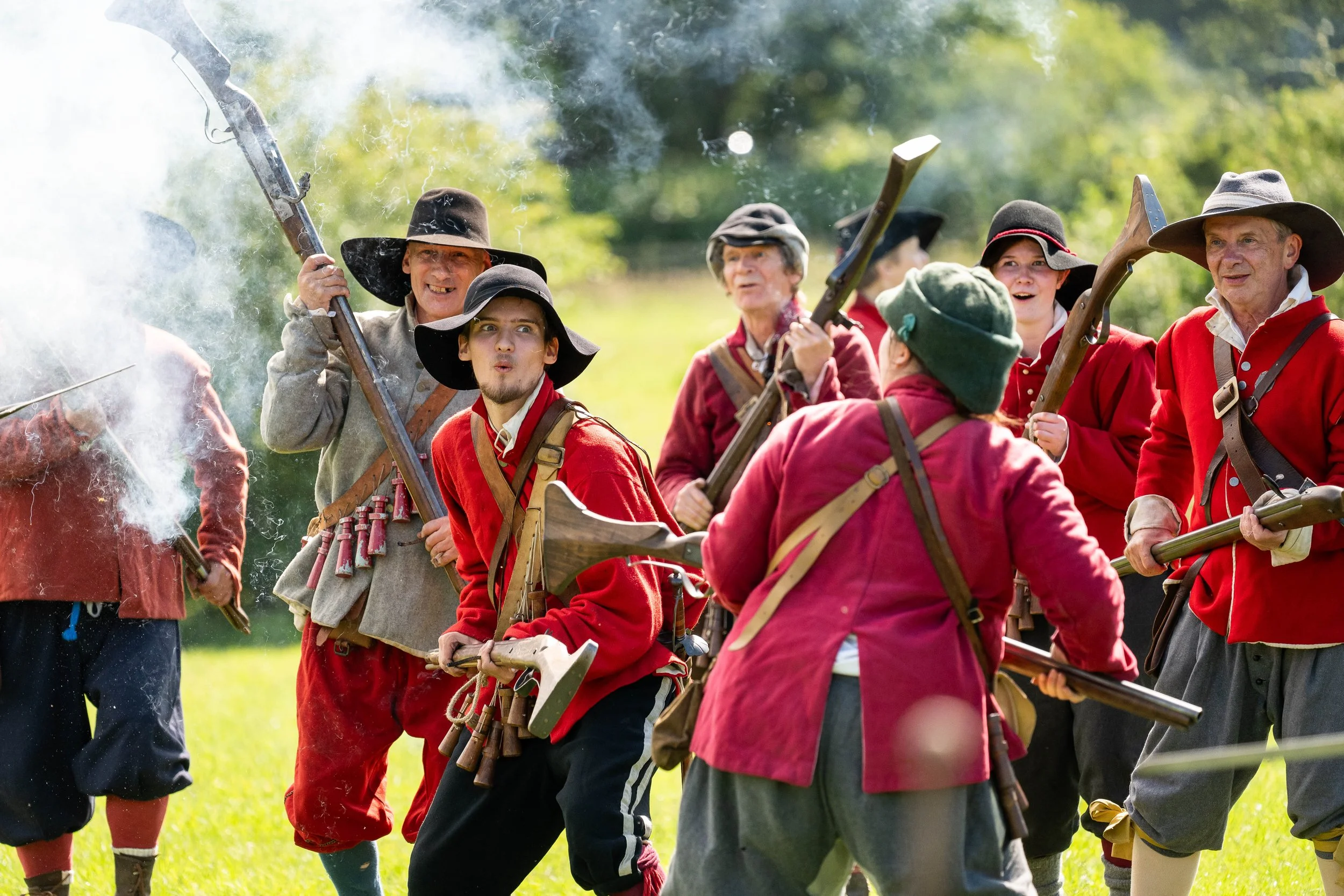
Last weekend saw the ‘Aylesbury Raiders’ attack a royalist stronghold as part of our English Civil War weekend. In today’s blog we delve deeper into the history of the English Civil War in the Chilterns.
What Was the English Civil War?
The English Civil War was a series of conflicts fought in the middle of the 17th century centred around a struggle for power between King Charles I and Parliament. Families and communities at all levels of society were drawn into the conflict and many suffered great losses.
At the heart of the upheaval was a radical challenge to the absolute power of the monarch – one which resulted in the only ever execution of a British monarch and the sole period of Republican rule in British history. The wars forever altered the relationship between monarch and Parliament, stirring questions of power and democracy that led to the long, slow rise of Parliament as the main instrument of power in the land. It is always difficult to estimate the casualties of war, but in England, Scotland and Ireland they have been estimated at 200,000.
Who Was John Hampden?
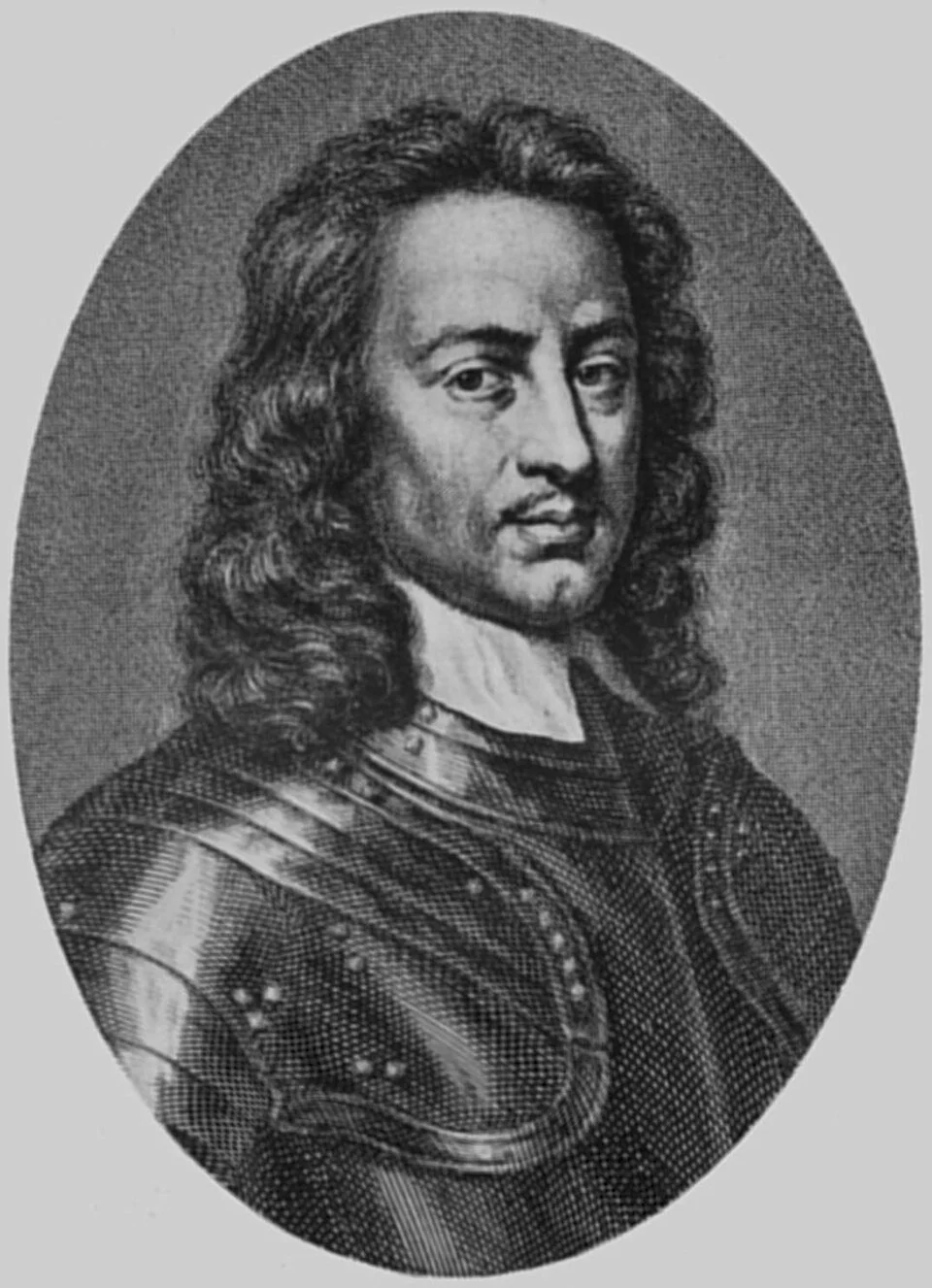
John Hampden From ''The Rise of the Democracy'', by Joseph Clayton Project Gutenberg. https://commons.wikimedia.org/wiki/File:John_Hampden_-_Project_Gutenberg_eText_19609.jpg

In 1640 John Hampden was elected as MP for Buckinghamshire. In one of the crises that led to the Civil War thousands of Buckinghamshire men rode to London to show support for Hampden because along with other MPs he was being threatened with arrest by the King for opposing the King’s Ship Tax. In December 1642 a Royalist army of 4,000, in the words of a contemporary writer had “driven much cattle out of Bucinghamsher”. Early in 1643 Wendover was plundered by the Royalists who seized goods, sheep and horses and damaged farm equipment to hinder the harvest. In October 1643 Dunstable and Leighton Buzzard were likewise plundered, followed by Newport Pagnell. The latter town was recaptured by the Parliamentarians and garrisoned by 1,500 troops, twice the town’s population.
Why Were the Chilterns Important in the English Civil War?
The Chilterns were strategically placed between Oxford, the Royalist Headquarters, and London, the centre of Parliamentary power. Despite the Chilterns’ geographical position between the two, few battles took place there except for the battle of Aylesbury in November 1642 where the Royalists were defeated and a skirmish at Chenies Manor where John Hampden’s son was killed. Both sides used this Chilterns “no-mans-land” as a place to send spies. One such spy, Jane Whorwood, also the King’s lover, regularly travelled through the Chilterns gathering information and smuggling gold to Oxford. On one occasion she smuggled 1,705 lbs of gold disguised as bars of soap. Cromwell’s spymaster, John Thurloe, owned the estate of Astwood near Newport Pagnell and employed code-breakers and others to intercept Royalist mail.
During the Civil War, Amersham served as the headquarters of the Parliamentary garrison, the Buckinghamshire Lieutenants. Oliver Cromwell’s family lived nearby at Woodrow High House, and he regularly passed through the town. He is recorded as “taking refreshments” at the Griffin Inn in 1645.
You can find out more about Cromwell’s spymaster in D.J. Kelly’s book “Buckinghamshire Spies and Subversives”.
There are some differing accounts on whether the Chilterns were the location of many battles. The Bucks Historical Society website has this account from 1879 by Robert Gibbs of Aylesbury…
‘No district in the kingdom could have suffered more from the calamities and hardships consequent upon the civil wars of the seventeenth century than that in which Buckinghamshire is situated. With stations of the King's army at Buckingham, Winslow, Bicester, Theme, Brackley, Brill, Haddenham, and adjacent places, and the Parliamentary forces quartered at Aylesbury, Hartwell, Wing, Bierton, Waddesdon, Leighton, Wendover, Missenden, Amersham, and Chesham, this usually peaceful county of ours must have been a scene of continued anarchy, confusion, and bloodshed.’
Thank you to Sir Marmaduke Rawdon’s Regiment of Foote who brought the English Civil War to life at the Museum on 13 & 14 June 2026.