
Wife Selling: Weird Customs of the Chilterns
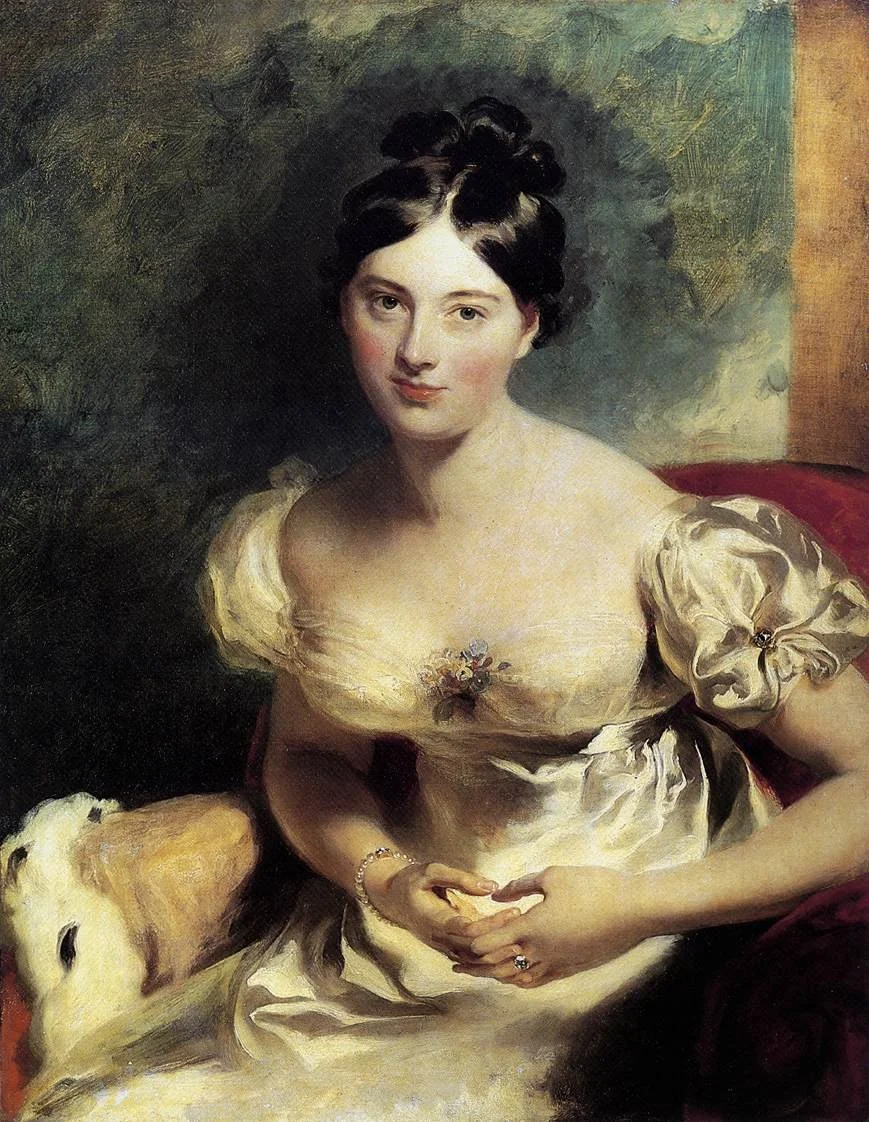
Marguerite, Countess of Blessingham by Thomas Lawrence, Public domain, via Wikimedia Commons
You won’t have heard of the Countess of Blessington, but her portrait hangs in the Wallace Collection in London and a copy of it is in the Drawing Room of Disraeli’s home in Hughenden near High Wycombe. Born Margaret Power in County Tipperary her childhood was blighted by her father’s character and poverty and she was forced to marry at 15 to Captain Maurice St. Leger Farmer whose drunken life led him to prison where he died by falling out of a window in October 1817. Margaret had left him after three months. Encyclopaedia Britannica states plainly that:
“Her father sold her into marriage at 15 to Captain Maurice St. Leger Farmer, a sadist from whom she fled after three months.”
While the buying and selling of wives was not common it was not unknown. In the Windsor & Eton Gazette of September 1815 we read:
“On Friday last the common bellman gave notice in Staines market that the wife of ------ Issey was then at the King’s Head Inn, to be sold, with the consent of her husband, to any person inclined to buy her. There was a very numerous attendance to witness this singular sale, notwithstanding that only three shillings and fourpence were offered for the lot….”.
The earliest of hundreds of cases recorded over the past 500 years is in the diary of a merchant tailor Henry Machyn in 1553:
“The 24th day of November did ride in a cart Cheken, parson of St. Nicholas Cold Abbey, about London for he sold his wife to a butcher.”
In 1822, Brooks, an auctioneer in Plymouth, put up his wife for sale. The Police interfered, but Mrs Brooks told the magistrates she was anxious to be sold, had made arrangements with a gentleman that he should buy her, an innkeeper being instructed on his behalf to bid to £20. If the reserve was exceeded she was content to go to the highest bidder. Astonishingly cases were still being reported in the 1920s.
No national statistics exist, but historians agree that it was never legally valid, never the norm and always a rare event, even among the poor. However the fact that individual cases were newsworthy suggests they were unusual enough to attract attention, but not unheard of, thus indicating that readers understood the custom.