
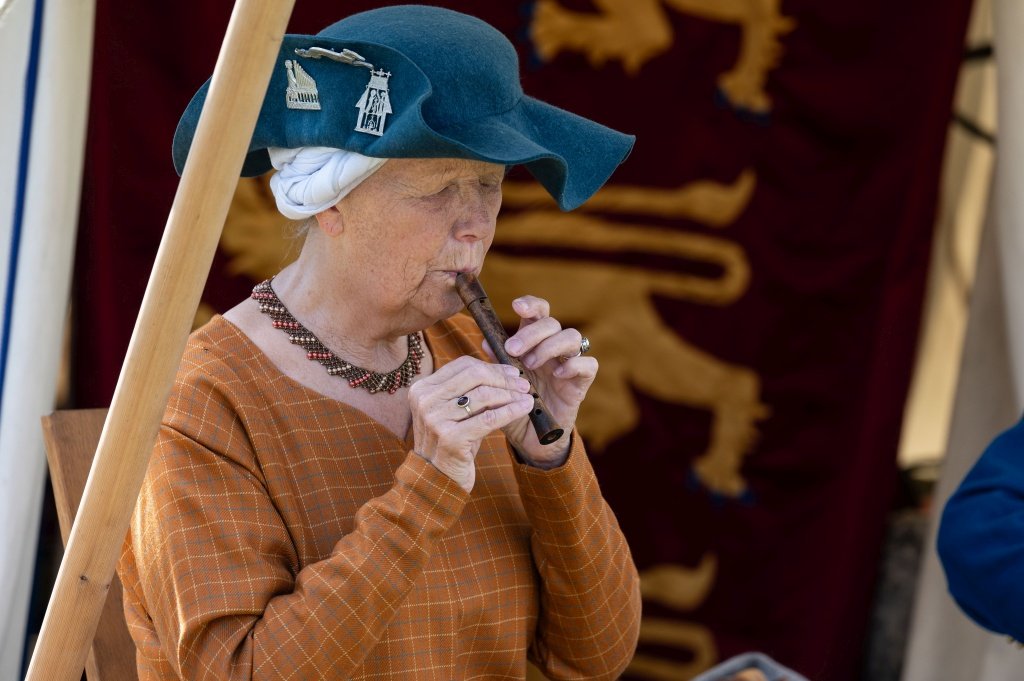
Medieval music making curtesy of The Plantagenets at Chiltern Open Air Museum
Church Ales appear to be an unlikely combination of words. In Medieval times they were a combination of merry-making, food, drink, dancing and games. An important source of revenue for parishes, they were common in the South of England.
Some Church Ales were fixed events while others were arranged when necessary, the latter implying that they were not simply excuses for partying, but something necessary before such things as local Rates were introduced. Since they were organised primarily for the upkeep of the parish church, churchwardens’ accounts contain interesting details.
The Accounts for the parishes of Seal and Elstead in Surrey, for example, show that in 1592 they bought among other things 3 Bushels of wheat; 9 barrels of beer; veal and lamb; a load of wood; spice and fruit; butter, cream and milk and gunpowder . They also paid for 5 days playing by musicians and a drummer, and for meat and beer for all the helpers.
Church Ales began to fall out of favour in the 17th century, but had a brief revival after the Restoration of the Monarchy and into the 19th century, especially in Oxfordshire, but were at that time organised by individuals rather than by the Church.
The First Food and Drink Safety Law?
Ale was an important part of people’s diet and so in 1266 the Government passed perhaps the first food and drink safety law that regulated the consistency, weight and price of bread and ale. Fermentation is a complex biological process that can produce variable results and there are many records of people being fined for producing bad ale. A government ‘ale taster’ would pour beer onto a wooden bench and sit in the puddle in leather trousers. If the trousers stuck to the bench after 3 minutes, there was too much sugar in the ale and fermentation had not been successful which meant that the ale would not be legal to sell.
Why Ale is Not the Same as Beer
Ale does not contain hops as a preservative and whereas beer contains hops as both a preservative and for flavour.
Discover the types of hops the Museum is growing to produce their own beer in the video below.