A Brief History of Bread Baking: From the Iron Age to the 20th Century
At Chiltern Open Air Museum we explore what life was like in the Chilterns through different time periods. This includes how people worked, their crafts and skills, and how they cooked and ate. Bread baking was a constant feature of life in our historic homes, from the Iron Age roundhouse to the 1940s prefab and now Museum Volunteer Jenny Templeton gives us an introduction to the history of bread baking.
Prehistoric Bread Making
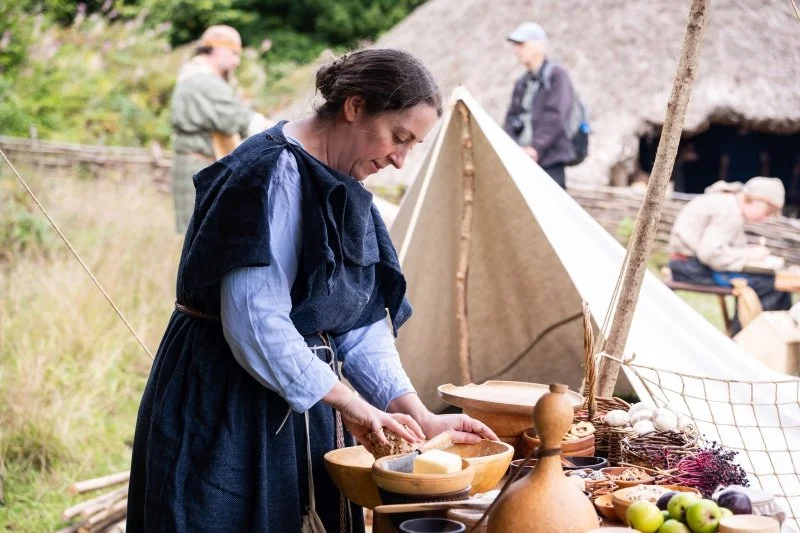
Archaeology and history show that bread has been eaten since earliest times. Remains of stone querns indicate that cereal was ground in prehistoric Britain. It’s likely that the grain would have been made into coarse flatcake/bread and cooked on a heated stone or over embers on an iron griddle.

At the Museum, we keep these early techniques alive by using two different types of quern to grind grain in our replica Iron Age roundhouse.
Roman Brick Ovens
The Romans brought many of their bread baking techniques to Britain. They used brick ovens fuelled by wood. Brick ovens were used from Roman times until the 19th Century. They used ale barm (the yeasty froth on the top of the fermenting ale) and sourdough to make the bread dough rise.
Yeasted Bread in the Victorian Era
Early Victorians used Brewers Yeast to leaven the bread (make it rise). Later blocks of compressed yeast became available. Active dried yeast was created in 1940 and would have been used by those living in Amersham Prefab.
Bread Baking in the 18th Century
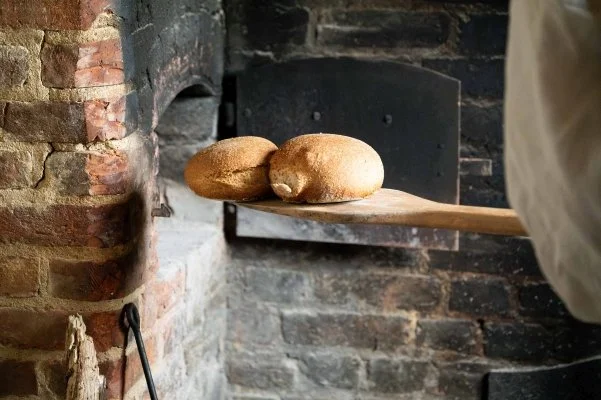
18th Century Leagrave Cottage at the Museum has a built in brick oven next to the fire. Other parts of the country may have used portable earthenware cloam ovens which were popular in the West Country. The last cloam oven was made in Truro in 1937.
Bread could also be baked in a lidded cast iron cauldron placed over hot embers, with more embers piled around the outside of the pot.
In some areas in the north of England and Scotland there was a tradition of baking unleavened bread made from barley, rye and oats and baked on a bakestone (a heated stone or iron slab) or an iron griddle.
Baking in the Cast Iron Ranges of the 19th Century
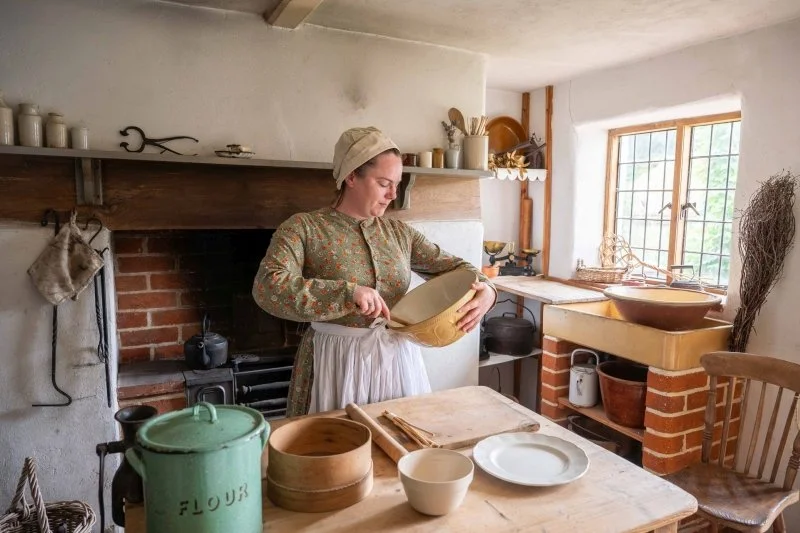
By the mid 19th Century, even small homes were installing cast iron ranges with ovens and hot plates fuelled by coal. Examples of these are in Haddenham Cottage, High Wycombe Toll House and the 20th Century side of Leagrave Cottage.
In 1863 a national food enquiry conducted by Dr Edward Smith revealed that only 20% of rural labourers baked their own bread, instead relying on professional bakers for this staple of their diet, much like we do today.
Jenny and Steve will be baking in a traditional portable oven on 21 June 2026 and you can see them baking in Leagrave Cottage in the blog below.