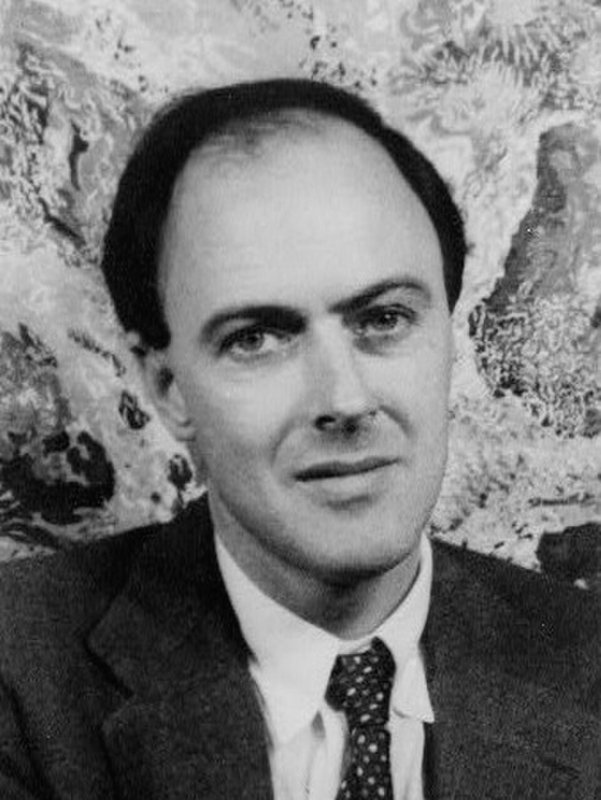
Roald Dahl in 1954 Public domain, via Wikimedia Commons
Every year on 13 September, Roald Dahl Day celebrates the birthday of one of Britain’s best-known children’s authors. From Matilda and The BFG to Charlie and the Chocolate Factory, his stories have entertained generations of readers.
Who Was Roald Dahl?
Roald Dahl’s Early Life
Roald Dahl was born in Wales in 1916 to affluent Norwegian immigrant parents, but lived for most of his life in England. He served in the Royal Air Force (RAF) during the Second World War and became a spy for MI6 when he was recruited by the Canadian spymaster William Stephenson. In 1943, he wrote his first official story aimed at children, which was called The Gremlins and was inspired by his time as a pilot. The story was about a group of naughty little creatures called Gremlins who would cause all sorts of mechanical problems on aircraft.
Life in Great Missenden
Dahl and his first wife, Patricia Neal, bought a house in Great Missenden in 1954 because he needed a quiet, rural base to write. The move predates the later, more famous purchase of Gipsy House, which he acquired in 1960. Although the sources don’t specify how he first heard of the village, they make clear why it would have appealed because it was rural but accessible, Great Missenden being on the main line to London Marylebone. All around was the quiet Chiltern landscape: beechwoods, hills, and farmland which offered exactly the kind of environment Dahl preferred for writing: calm and slightly old‑fashioned.
A Famous Children’s Author
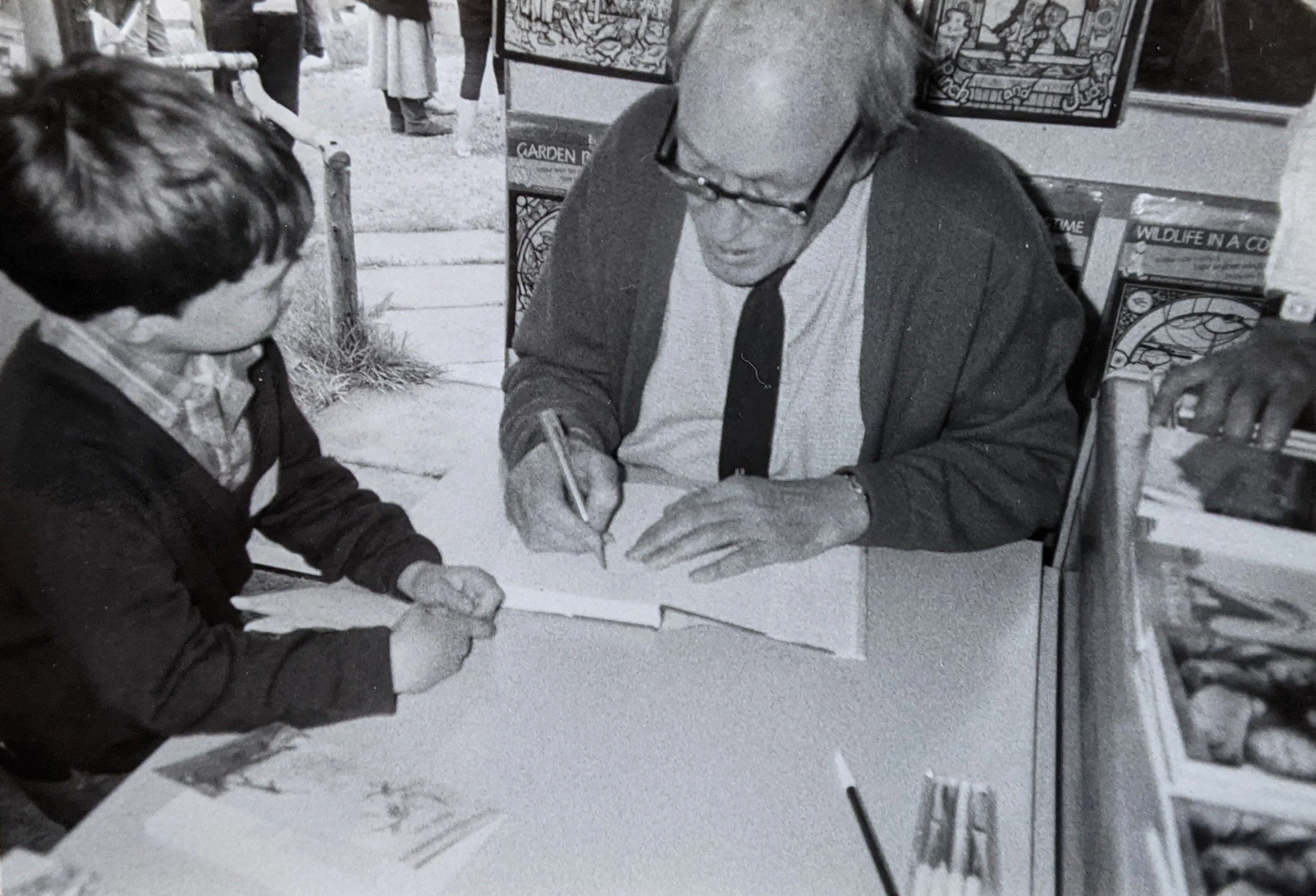
Roald Dahl at COAM in 1988
Dahl went on to write some of the most recognisable children’s books of the twentieth century, including James and the Giant Peach, Fantastic Mr Fox, The Twits, The Witches and Matilda.
His books became known for their unusual characters, dark humour, invented words and stories in which children often outsmart unpleasant or foolish adults. Illustrator Quentin Blake’s drawings also became closely associated with Dahl’s stories.
Roald Dahl’s Legacy
Roald Dahl died in November 1990 at the age of 74 of a rare blood disease at his home in Great Missenden, and was buried in the cemetery at the parish church of Saints Peter and Paul.
His connection with the Chilterns remains strong today, particularly through the Roald Dahl Museum and Story Centre in Great Missenden.
More than 30 years after his death, his stories continue to be read, performed and adapted around the world, making Roald Dahl one of the most familiar names in children’s literature.