John Nash: Famous People of the Chilterns
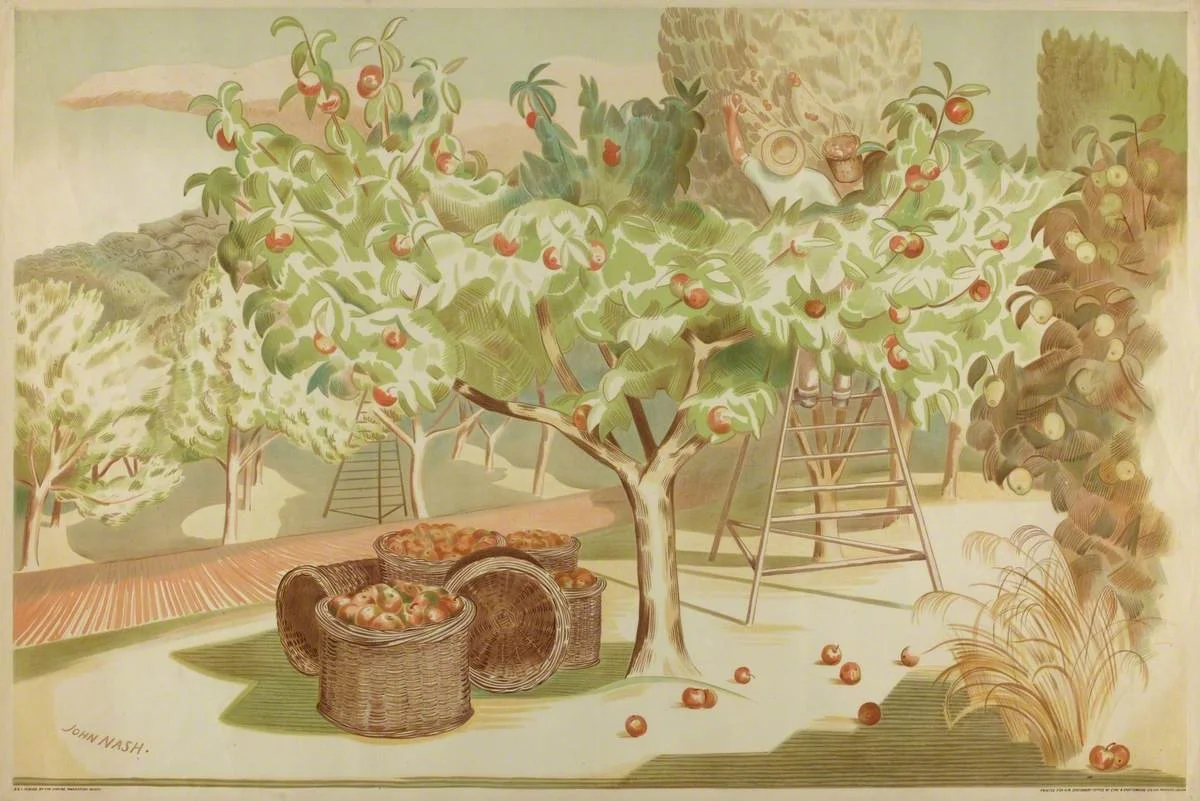
Orchard of Apple Trees at Harvest Time by John Northcote Nash (1893–1977) and Her Majesty's Stationery Office (HMSO) and Eyre & Spottiswoode Ltd (active c.1875–c.1970). Image Credit: Manchester Art Gallery
If you've ever wandered through the farms and landscapes of the Chiltern Hills and wondered who managed to capture their quiet beauty so perfectly, the answer is often John Nash.
Who was John Nash?
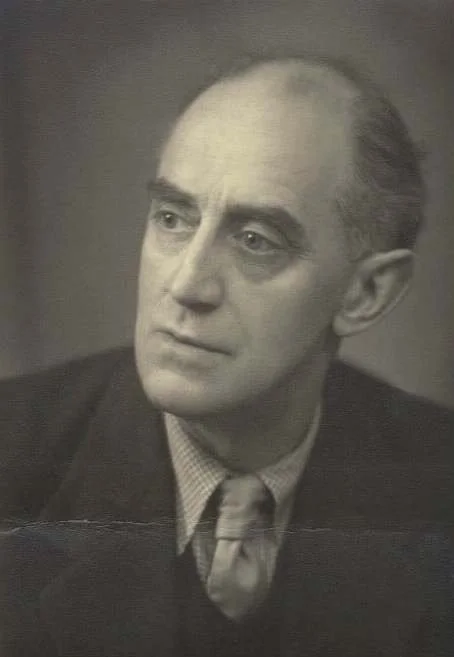
John Nash in 1951 (cropped), Elliott & Fry, Public domain, via Wikimedia Commons
John Nash (1893–1977) was one of Britain's best-loved landscape artists, and although he painted scenes from across the country, the Chilterns held a special place in his heart. He had a remarkable ability to turn ordinary countryside into something memorable. A simple hedgerow, a winding country lane, or a field of corn could become a painting full of atmosphere and character.
The Early Life of John Nash
John Nash was born on 11th April 1893 in Earls Court in London as were his brother Paul in 1889, and his sister Barbara in 1895, the children of William Nash, Recorder of Abingdon and his wife Caroline. John and his brother Paul often visited their uncle’s house in Sinodun, now in South Oxfordshire but then in Berkshire. John wrote later that the area around Wallingford and the Wittenham Clumps had a strong influence on him and his brother when they began to paint. The brothers often visited art galleries during their school years.
Moving to Buckinghamshire
In 1901 the family moved to Wood Lane House, Iver Heath in Buckinghamshire, principally for the sake of their mother, Caroline’s health. The Nash family had long family roots in Buckinghamshire going back hundreds of years. In the 1960’s John wrote of the importance of this move to the countryside. “Country life was fresh and exciting after Kensington and varied enough to suit my interests… The great woodland barrier of Langley Park and Black Park between us and industrial Slough and the undulating wooded country over the Aldenham Brook leading to Gerrards Cross and the emerging Chiltern Hills.” In February 1910 tragedy struck the family when Caroline died in a mental Hospital.
John Nash’s Early Career as an Artist
John had an early interest in botany, painting and drawing, and, after he left school he became involved through his brother with artists such as Ben Nicholson and Claughton Pellew. His horizons widened and he became an accomplished artist. John and his brother Paul were both War Artists during the First World War and after the war they jointly rented a herb-drying shed at Tubbs Farm, Horn Hill, Chalfont St Peter which is not far from COAM. It was while he was there that he painted “The Cornfield” which, along with other paintings by him, is now in the Tate Gallery and can be viewed on the Tate’s website.
WW1 Battlefields

Over the Top by John Nash, Public domain, via Wikimedia Commons
During the First World War, Nash served as a soldier before becoming an official war artist. Some of his wartime paintings are among the most powerful records of the conflict, showing both the devastation of the battlefield and the resilience of the people who lived through it. One of his paintings, “Over the Top”, is in the Imperial War Museum.
After the war, he returned again and again to painting the countryside, perhaps finding comfort in its familiar rhythms.
John Nash’s Life after WW1
After the First World War, he sought refuge in the fields, woods, and rolling horizons of Buckinghamshire, Suffolk, and Essex, finding in them a kind of spiritual renewal, stability, order, and solace. Writers like Ronald Blythe described works such as The Cornfield (1919) as expressions of “thankful relief at living again”.
His emotions concerning the war continued to linger for many years, and this is particularly evident in The Moat, Grange Farm, Kimble, exhibited in 1922. In this brooding landscape the trees and their tendril-like branches envelope the entire picture plane.
Other Buckinghamshire scenes he painted include Kop Hill (Princes Risborough), and Landscape near Princes Risborough. His work can be seen at the Victoria Art Gallery, Bath, and Tate Britain, London.
As well as being a painter, John Nash was an accomplished illustrator, printmaker, botanist, and gardener. His love of plants and wildlife shines through in the incredible attention he gave to trees, flowers, and crops. Even the smallest details in his paintings feel carefully observed without ever becoming fussy. Indeed, he called himself an “Artist Plantsman”. In his book “John Nash – Artist and Countryman” Andrew Lambirth states: “The paintings came out of his relationship with the landscape… [His] knowledge and experience of the countryside fed and watered his art.”
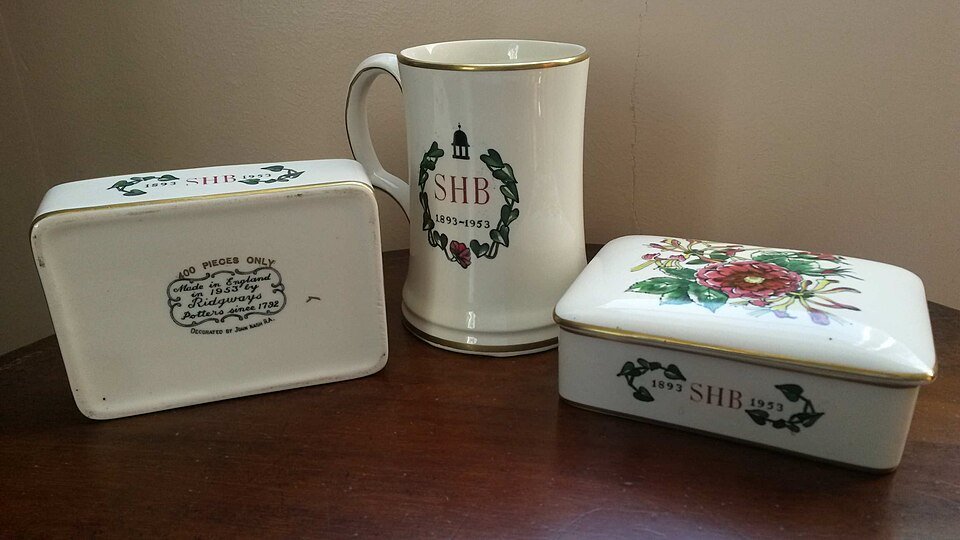
Commemorative china produced for S H Benson Ltd celebrating 60th anniversary of the company's founding. 1893-1953. Manufactured by Ridgways potters, artwork by John Nash RA. Sandpiper, CC0, via Wikimedia Commons
Where Did John Nash Live?
John Nash and his wife Christine lived on Horn Hill Road, Chalfont St Peter before moving Gerrards Cross in 1919, often visiting Whiteleaf on the Icknield Way. They then rented a cottage in Monks Risborough, finally moving to a house called Lane End House in Meadle where they were to live for 22 years. During the Second World War he was once again a War Artist and in 1944 they left the Chilterns to live in Wormingford near Colchester.
John Nash’s Legacy
Today, walking through the Chilterns, it's easy to imagine the scenes that inspired him. Many of the landscapes he painted still look surprisingly familiar. The same sweeping hills, winding footpaths, hedgerows, and beech woods continue to define this much-loved part of southern England.
John Nash's legacy is more than a collection of beautiful paintings. He helped people see the quiet charm of the English countryside and encouraged us to slow down and appreciate the landscapes that surround us. His work is a reminder that sometimes the most ordinary places are the ones worth looking at most closely.