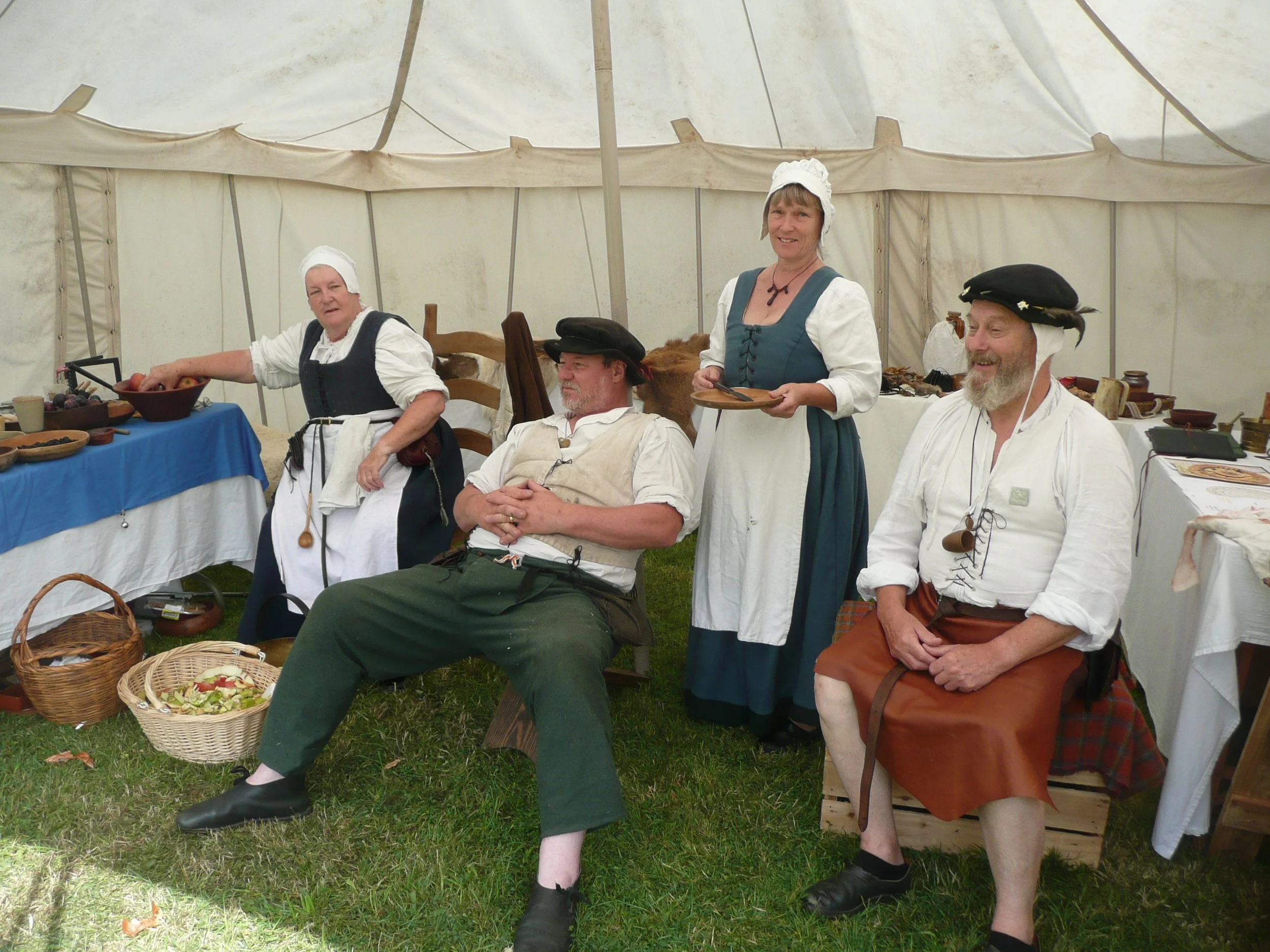
Tudor Re-enactors. Image courtesy of The Companye of Merrie Folke
In England and Wales, the Tudor period occurred between 1485 and 1603, including the Elizabethan era. The Tudor period coincides with the reign of the House of Tudor, which began with the accession of Henry VII and ended with the death of Elizabeth I.
During Tudor times, most people in the Chilterns lived in small villages or hamlets, working on mixed farms of grain, sheep and woodland products thanks to the region’s extensive beech woods.
The Chiltern landscape of woodland edges and chalk downland was ideal for hawking and so rural economies would also have been supported by this pastime of the nobility. Gamekeepers and estate staff would manage woodland and protect nests. Skilled servants would be training, flying, feeding and transporting birds. Many craftspeople such as leatherworkers, bell-founders and carpenters were also linked to falconry.
Status in Tudor Society
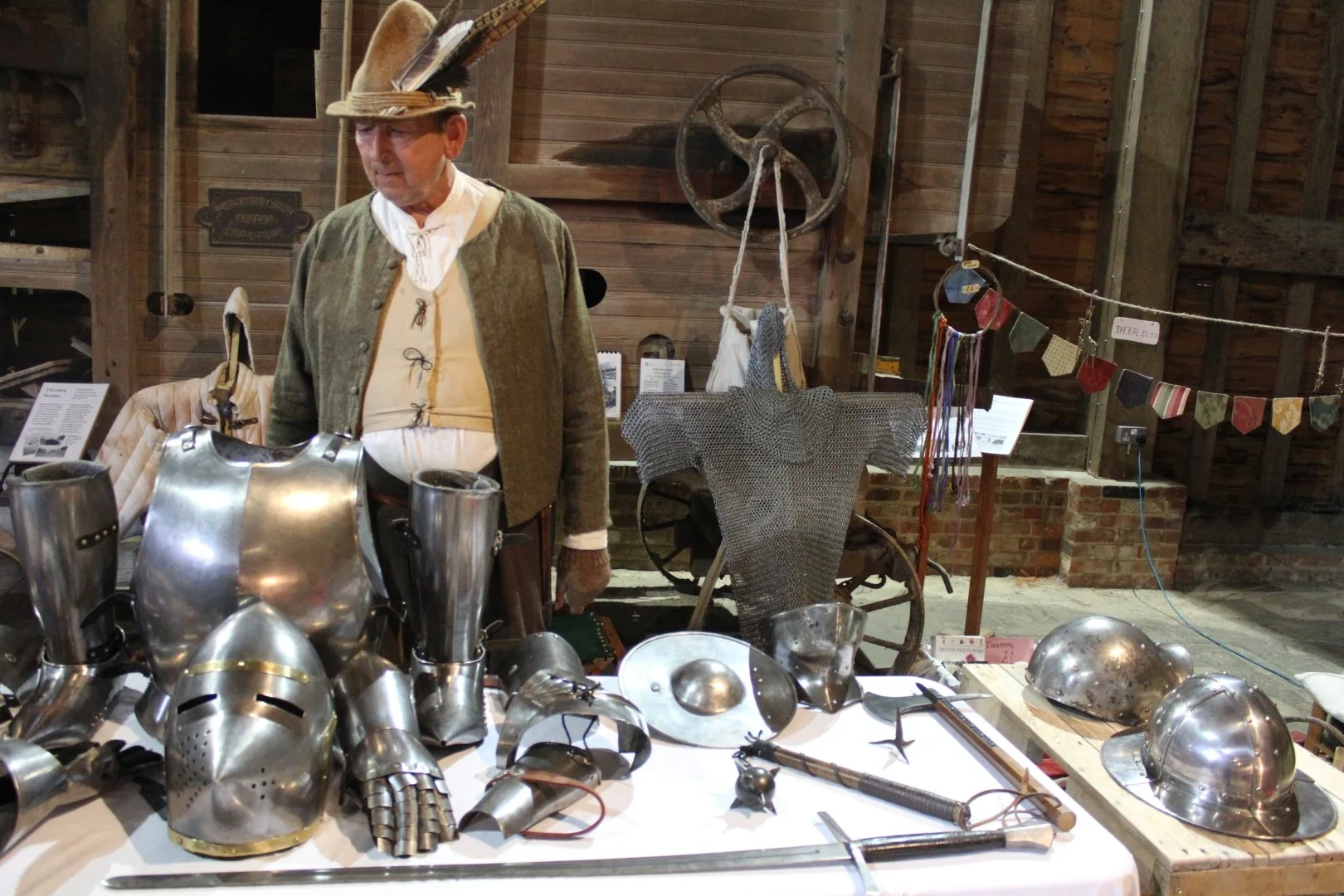
A demonstration of Tudor armour and weaponry. Image curtesy of The Companye of Merrie Folke
Tudor society was divided into four broad groups. At the top were the nobility who owned vast amounts of land. Then came the gentry and rich merchants who could also own large amounts of land, were usually educated and had a family coat of arms. Below the gentry were yeomen and craftsmen. Yeomen owned their own land. They could be as wealthy as gentlemen, but they worked alongside their men and could read and write. Below the yeomen were the tenant farmers who leased their land from the rich. Then there were labourers who worked for a wage, often illiterate and very poor.
Tudor Industries in the Chilterns
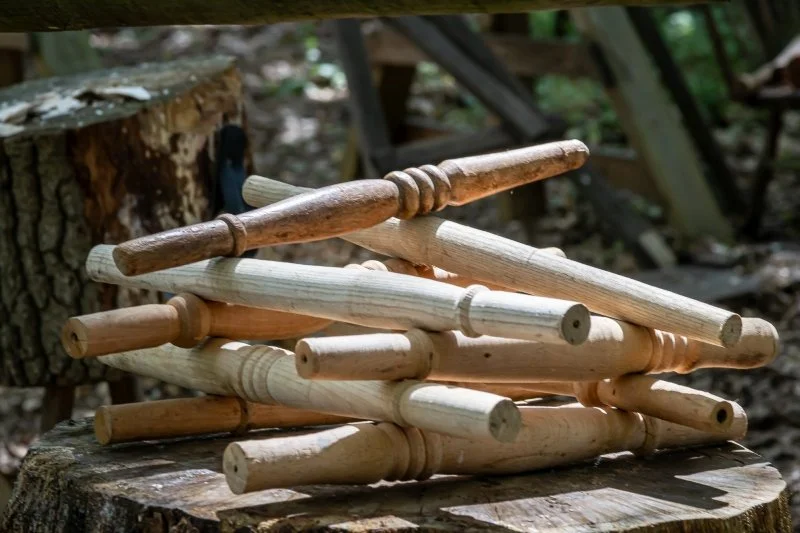
Traditional wooden chair legs as made by the Bodgers of the Chilterns
The Chilterns extensive woodland meant that coppicing, bodging (turning chair legs on pole lathes in the woods), charcoal burning, and timber cutting for the London building market were all practised which would later evolve into the region’s famous chair-making industry. At the Museum we have an area of woodland where we regularly have bodgers demonstrating their craft.
Tudor Buildings at COAM
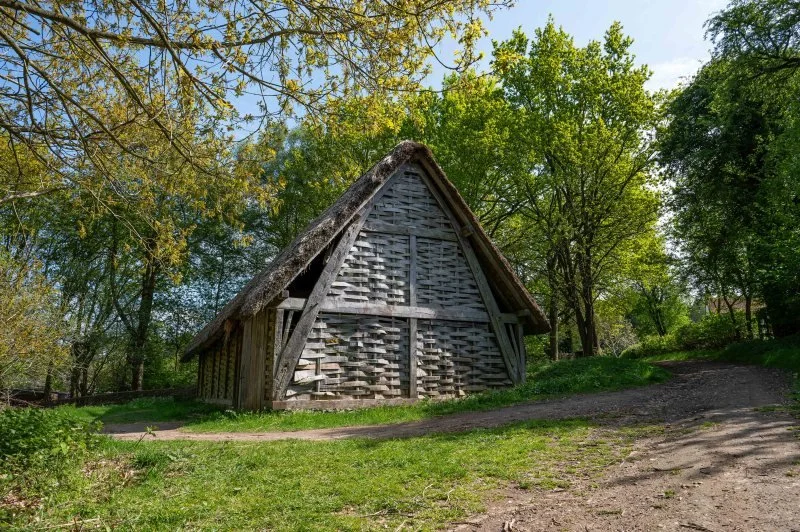
Arborfield Barn at COAM
Arborfield Barn stands as a remarkable example of Tudor-era architecture, featuring a distinctive cruck frame and a medieval-style thatched roof and used for the storage of food or housing animals. This historical building comes from Carters Hill Farm near Arborfield, Reading. Constructed around the year 1500, it showcases the enduring craftsmanship of an architectural style prevalent since the 13th century.
Northolt Barn is another Tudor building thought to have served as a hay barn, storing fodder for the London market. It bears an inscribed date of 1595 on the left-hand door post. The central bay, featuring the entrance, indicates no rear doorway, which reflects the barn's use solely for hay storage rather than threshing. During the 16th and 17th centuries, Northolt's vicinity to London made it a key hay-growing area, possibly explaining the barn's original purpose.
Everyday Life in the Tudor Era
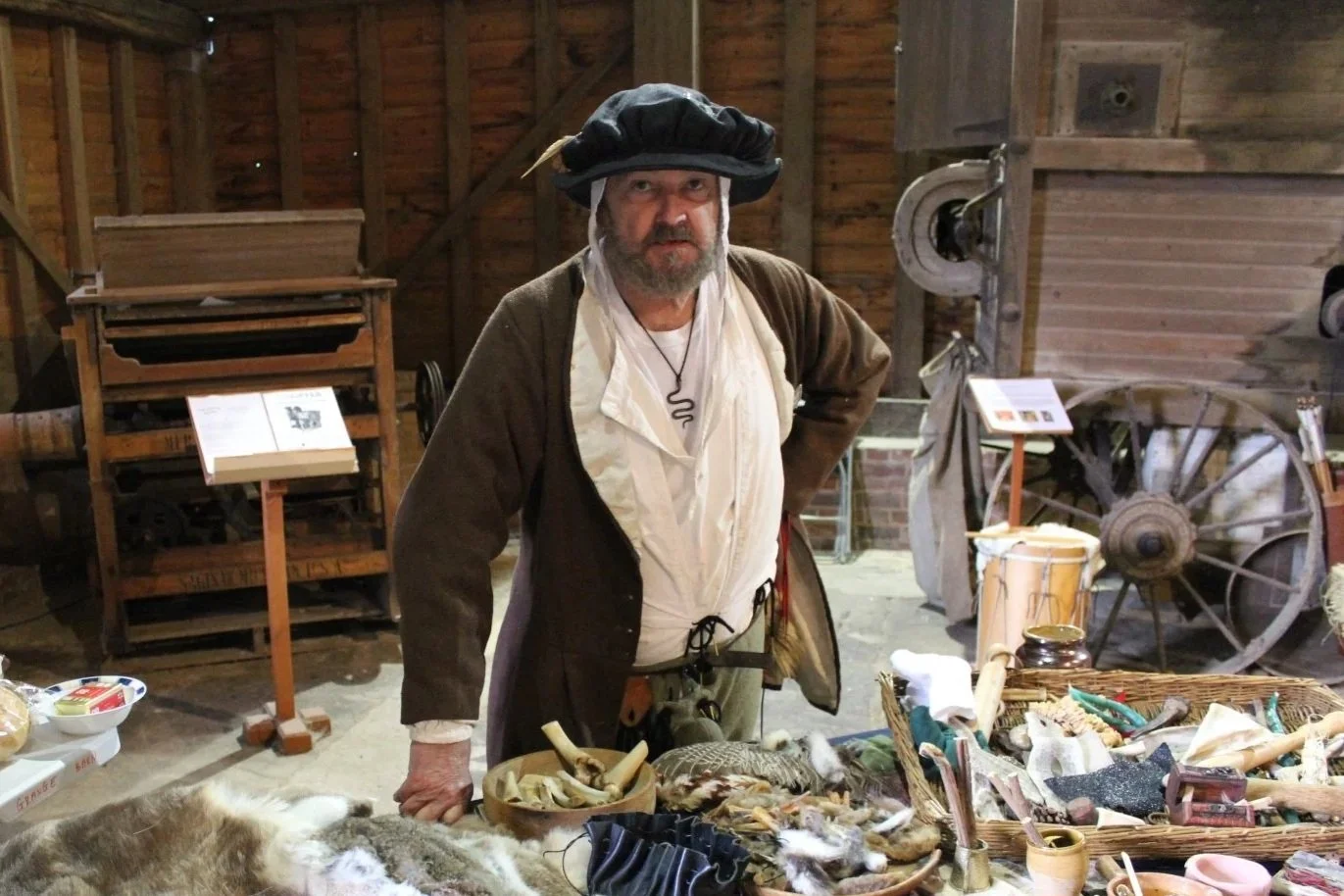
A Tudor Re-enactor. Image courtesy of The Companye of Merrie Folke
In the Tudor period the majority of the inhabitants of small villages had a very hard time with a life expectancy of about 60 years and would have lived in humble wattle-and-daub houses, often with a thatched roof and an earth floor. There was also a very high infant mortality rate of around 14% dying before their first birthday, and women had a shorter life expectancy than men due to the risks posed by childbirth. All members of a family including even young children who would be expected to work by helping about the house, running errands and helping with less arduous tasks such as gleaning, gathering wood, looking after domestic animals, scaring birds, etc. The working day was long for everyone. A Statute of 1563 ruled that in Winter labourers should work from dawn to dusk and from March to September from 5 a.m. to 8 p.m.
Even the boys of relatively well-off families which could afford to provide some education for their sons still had a hard time. In Nicholas Orme’s book “Tudor Children” he quotes some words which the pupil had to translate into Latin and which clearly reflect the boy’s situation. “The most part of this winter my hands were swelling with cold that I could neither hold my pen for to write, neither my knife for to cut my meat at the table, and my feet also they were arrayed with chilblains [so] that it grieved me to go anywhere.”
In the second half of the 16th century there were seventeen principal holy days recognised by the Anglican Church and preparations for these involving cooking and organising special events such as Holy Days, markets and fairs added some variety to the Tudor Age lifestyle. The Chilterns lay near major routes to London, so people encountered travellers, merchants, and news more often than in more remote regions. Moreover, markets in towns such as Amersham, Chesham, and High Wycombe connected country dwellers to wider trade networks.
Outdoor leisure activities that could well happen during markets and fairs included tennis, bowls, archery, fencing, and team sports like football and hockey which were however far more violent than their modern versions. Card games, board games, and gambling were all immensely popular, as were music and dancing events where people could enjoy themselves and have a break from their normal hard labour. However, the ruling class did not want the common people to waste time on games and sports - wasting valuable time that could be used for archery practice, which the Crown saw as essential for national defence. A law was passed that banned ordinary people from playing a whole range of games including tennis, dice, cards, bowls and skittles. In practice the law was rarely enforced uniformly across England. It tended to be applied when authorities wanted to make a point such as during musters and archery inspections and in towns where disorder or gambling was already a problem. This ban was finally repealed on 1 May 1961 when the Betting and Gaming Act 1960 came into force.
You can discover more about Tudor life at one of our Tudor-themed living history events and encounters.